
The Newest -Q of drugs for alzheimer’s patients. First of all, FDA ( U.S. Food and Drug Administration) has approved two types of prescription medications. Again, cholinesterase inhibitors and memantine . In short, to treat the cognitive symptoms of Alzheimer’s. For example, memory loss, confusion as well as thinking and communicating issues.
Alzheimer’s is a progressive disease. First, , brain cells die and connections among cells are lost. Hence, making symptoms worse. Again, there is no current medications thet stops the disease, However, drugs may help reduce symptoms. Again, stabilize symptoms for a limited time. The drugs affecting certain brain chemicals. Again, chemicals involved in carrying messages in the brain. Health Care Professionals may prescribe both types of prescriptions at the same time..
Drugs for alzheimer’s patients require medication safety
First, talk with the doctor. Second, prior to starting a new medication, make sure the doctor and pharmacist know all the pills being taken. Also, include OTC pills and supplements. This is important. Henceforth, preventing future negative side effects.
Medications called cholinesterase inhibitors are prescribed for mild to moderate Alzheimer’s disease. These drugs may help reduce some symptoms and help control some behavioral symptoms. The medications are galantamine, rivastigmine and donepezil. Types of drugs for alzheimer’s patients
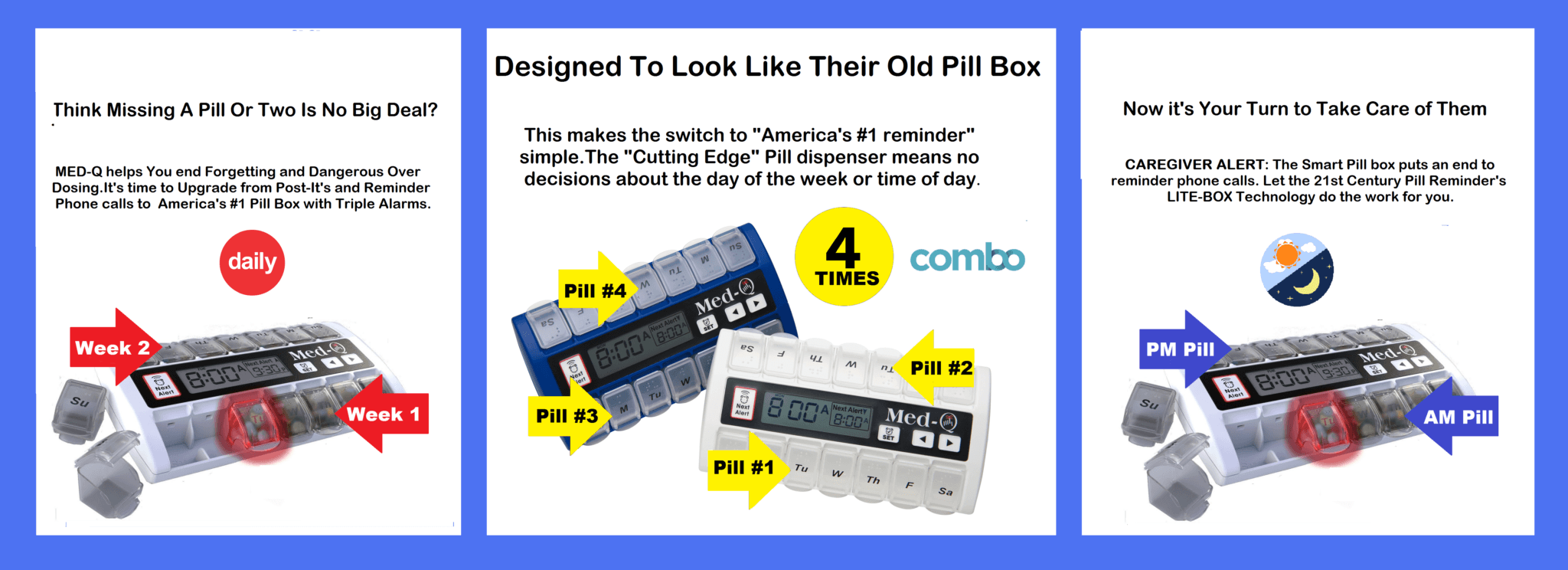 Electronic Medication timer for Alzheimer’s
Medications for early to moderate stages
First, These are approved to treat Alzheimer’s symptoms in early to moderate stages. For example, drugs called cholinesterase inhibitors. Cholinesterase inhibitors are for memory, thinking and language loss. In addition, effective for loss of judgment and other thought processes.
- Try to prevent the breakdown of acetylcholine. This is a chemical messenger important in learning. In addition important in forming memories. This helps nerve cells communicate by keeping acetylcholine levels higher.
- Delays symptoms. Finally, effectiveness varies in all people.
- First, well-tolerated with few side effects. However, side effects may include nausea and loss of appetite. In addition, going to the bathroom more often. Finally, it is strongly recommended that a physician who is experienced in using these medications monitor patients. To sum up, making sure all guidelines be strictly observed.
Sponsored by Med-Q automatic pill dispenser for alzheimer’s patients
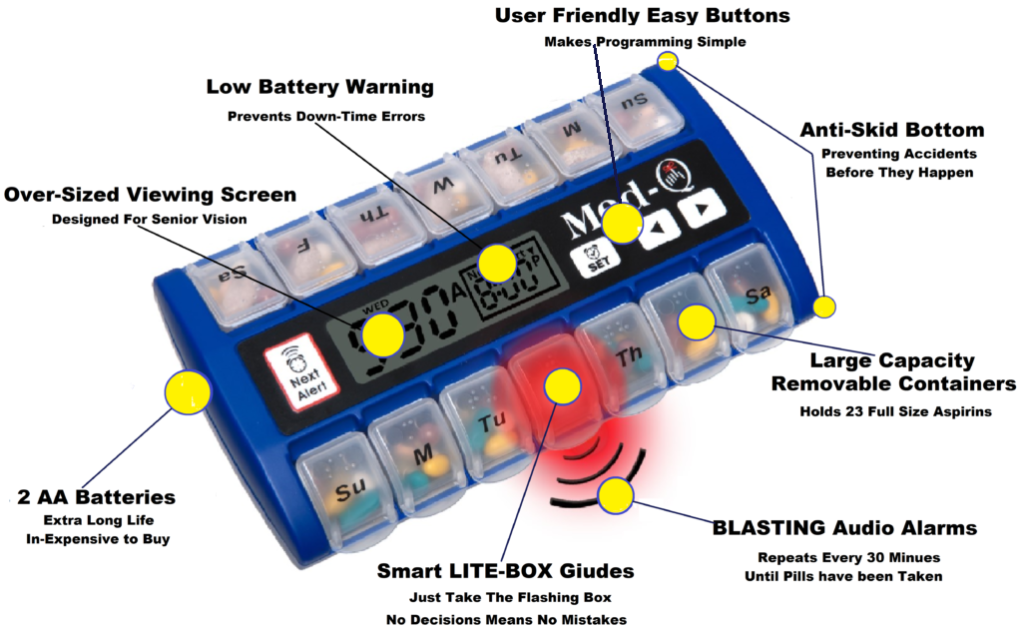 Med-Q automatic pill dispenser for alzheimer’s patients
Cholinesterase are prescribed drugs for alzheimer’s patients
 alzheimer’s patients
- Donepezil is approved to
for all stages of Alzheimer’s. - Galantamine is approved for mild-to-moderate stages.
- Rivastigmine is for mild-to-moderate Alzheimer’s. In addition, effective in mild to moderate Parkinson’s disease.
Medications for moderate to severe stages
An automatic pill dispenser for Alzheimer’s patients will hold a few different pills. For example, a combination of memantine and donepezil . Examples, of approved treatment of moderate to severe Alzheimer’s.
Memantine is given for memory improvement
Memantine is a top performer. First, given to to improve memory as well as attention spans. Second, found to raise reasoning skills. Third, language and even the ability to do some simple tasks. Furthermore, it can be used with other Alzheimer’s medications. Finally, evidence shows some individuals can benefit greatly by taking memantine.
| Generic | Brand | Approved For | Side Effects |
|---|---|---|---|
| Donepezil | Aricept | All stages | Nausea and vomiting. Not being hungry. Getting muscle cramps. Increased frequency of going to the bathroom. |
| Galantamine | Razadyne | Mild to moderate | Nausea and vomiting. Not being hungry. Getting muscle cramps. Increased frequency of going to the bathroom. |
| Memantine | Namenda | Moderate to severe | Headache, constipation, confusion and dizziness. |
| Rivastigmine | Exelon | Mild to moderate | Nausea and vomiting. Not being hungry. Experiencing cramps in the muscles. Increased frequency of going to the bathroom. |
| Memantine + Donepezil | Namzaric | Moderate to severe | Nausea and vomiting. Not being hungry. Getting cramps in the muscles. Increased frequency of going to the bathroom. Headaches and constipation. Finally, confusion and dizziness. |
How Alzheimer’s medications work
Again, people need to understand how the brain works. The image below shows nerve cells in the brain. Neurons are destroyed by Alzheimer’s.

First, Understand how Alzheimer’s medications work
Neurons connect and communicate at synapses. First, tiny bursts of chemicals happen. These are called neurotransmitters. Hnece, carrying information from one cell to another. Alzheimer’s disrupts this process. Finally, the disease destroys synapses. Hence, killing the neurons. To sum up, damaging the brain’s communication network.
New Treatments On the Horizon
In short, researchers have made amazing progress. First of all, a new understanding the way Alzheimer’s works. The goal, modern medications to slow or stop the disease.
