Good and Bad of Seniors Drinking Coffee

First of all, Seniors love coffee. Second of all, seniors drink more coffee than any other group. Third of all, 75% of Americans over 58 drinking over one cup per day. Reported by the Statistica. Again, a few cups every day may positively affect health. In addition raise levels of personal energy . Finally, improved mood levels. However, over doing it may cause problems with sleep. In addition, low hydration as well as exportation other health conditions. Finally, Seniors should still enjoy a cup or two.. Finally, trying to manage consumption is necessary. The goal, prevent some of the negative side effects. To sum up, be aware of how much coffee your senior parents are drinking. Here are some of the effects of caffeine on elderly men and women.
Good side of 55 plus Drinking Coffee
What are the good side of Coffee? First, Senior coffee drinkers enjoy the morning cup. Again. a quick jolts the body to raises one’s own alertness. For example, improving cognitive functions. Another example, reduce the risk of certain kinds of chronic conditions. To illustrate, Parkinson’s disease, type 2 diabetes, liver disease.

Look to Coffee and Health for stats. Research indicates 3 – 4 cups may reduce risk of type 2 diabetes. In fact, as much as 24 percent. Both sexes benefit. In fact, same benefits whether drinking caffeinated or decaffeinated. Also, consumption reduces or delays onset of of Parkinson’s Disease. In short, caffeine and Eiconsanoyl-5-hydroxtrypatmide work together to prevent the biochemical changes associated with Parkinson’s Disease. Finally, this was explain by the American Parkinson Disease Association.
In addition, there are more benefits. A study about Cardiovascular Risk Factors, Aging and Dementia study shows cause and effect. Seniors that drink 3-5 cups at midlife (40-55) have a great effect. For example, decreasing the risk of dementia and Alzheimer’s Disease. In fact, by about 60% in later life. Benefits are form the roast, not the caffeine. Studies to identify the protective effects of caffeine against dementia are ongoing.

drinking coffee
Another example, a drop in the risk of heart failure. i Individuals, including seniors, that consumed 1-4 daily cups are 18 percent less likely to die from (heart attack) cardiovascular disease.
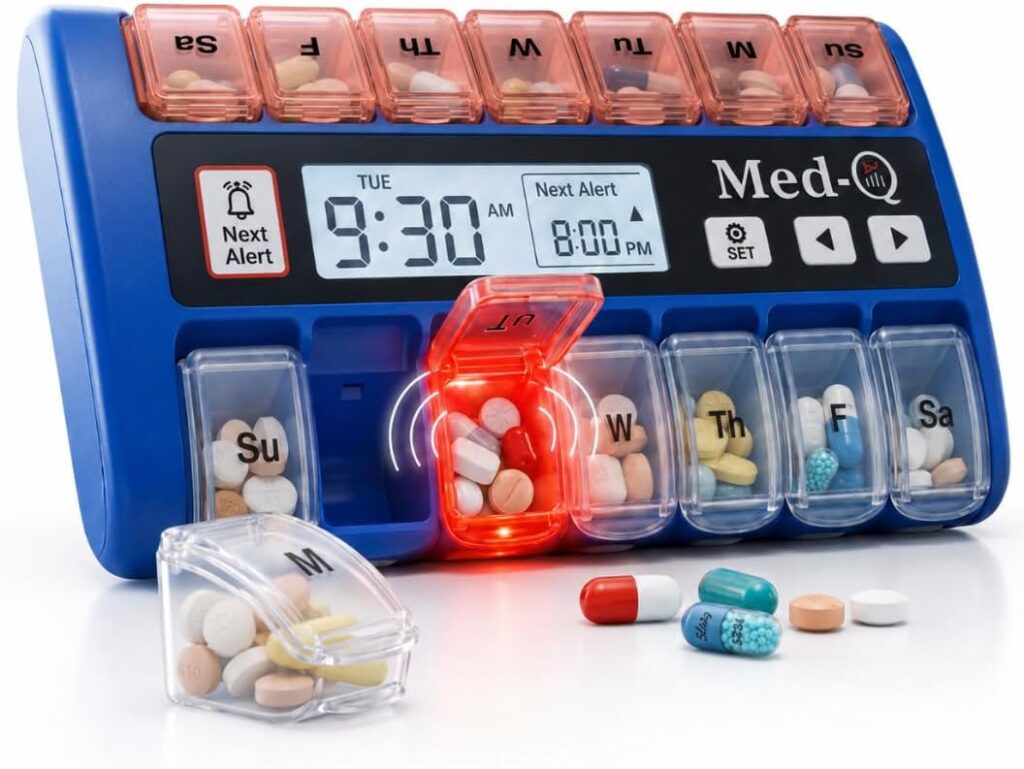
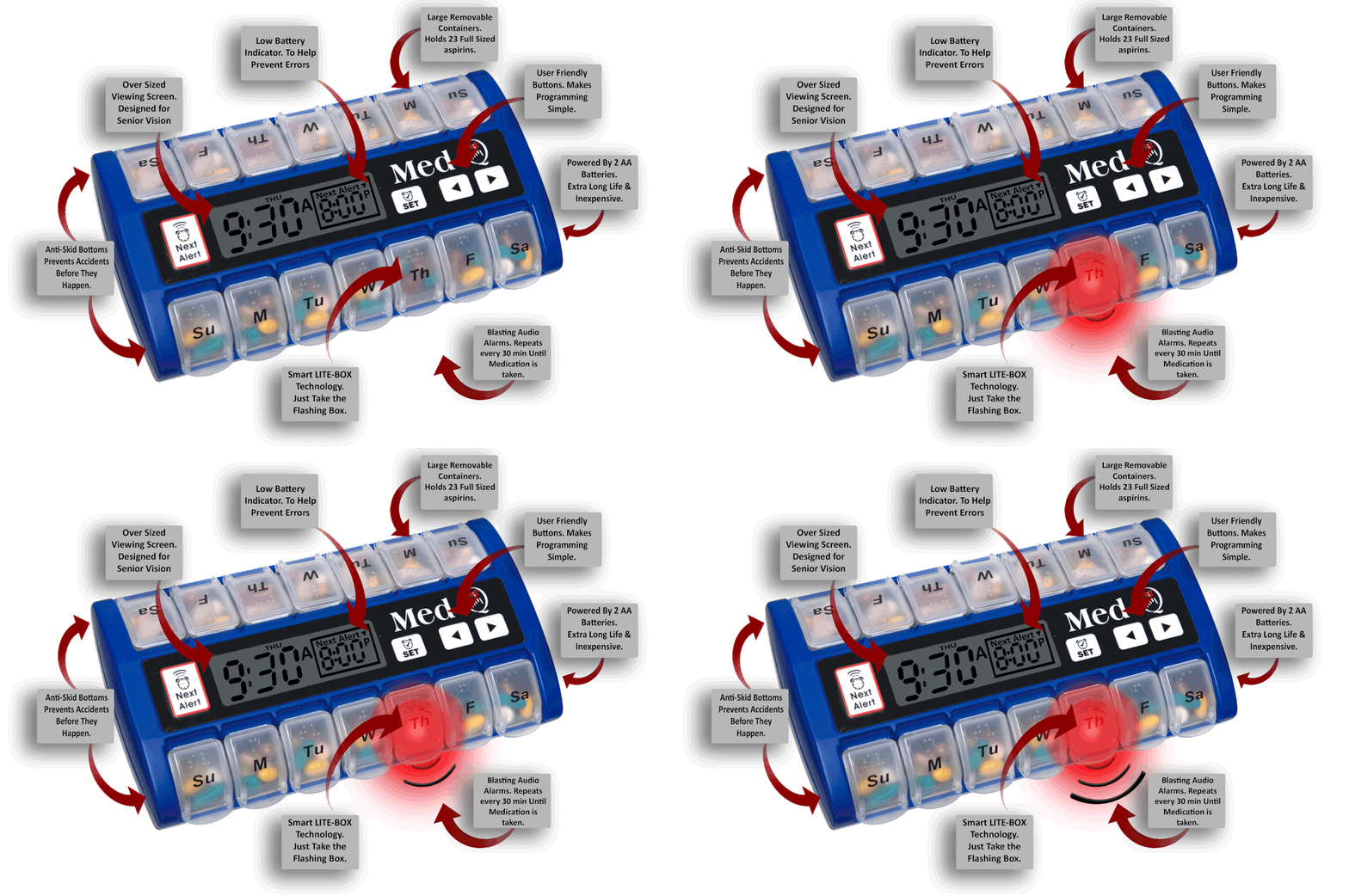
Sponsored by Med-Q Medication Compliance System
The Bad of Seniors Drinking Coffee
First, caffeine is not bad for the elderly in moderation or low levels. However, drinking 4 plus cups of coffee daily might have some bad effects. For example, anxiety, headaches, restlessness and even heart palpitations (reported by the Mayo Clinic). Furthermore, excessive amounts of caffeine overstimulates the nervous system. Hence, to jitters and even an upset stomach. Finally, to much leads to elderly sleep issues.

The metabolic clearance of caffeine in older adults (58 plus) will take 35% longer to metabolize than younger people. Hence, it stays in the nervous system 35% longer. For example, parents who drink a cup of coffee at 5 p.m., chances are their body is still processing it at 1i p.m. Again, keeping them up at night.
Dehydration causes hospitalization among adults over 65
Again, drinking coffee instead of water can contribute to dehydration

Coffee can irritate ulcers and gastritis. Caffeine cause the production of stomach acid. In addition it will also stimulate gastric acid production. Coffee may reduce the potency of certain medications in s medication box with alarm. For example, antidepressants, thyroid medication and stereopsis drugs. In short, it will lower absorption rates into the body cites AARP. For example, thyroid medication with coffee reduces absorption up to 50 percent. In some cases, java can amplify the stimulate of certain drugs, further increasing heart rate and causing jitters.
Other Foods with Caffeine
Consider other foods that add to caffeine to the diet. Among the typical offenders are:
- Chocolate
- Tea
- Ice cream and frozen yogurt
- Pudding
- Hot Cocoa
- Soda
- Energy water
- Pain relievers
- Protein bars
To illustrate, a 12-ounce coke has 50 mg of caffeine. Another example, a ounce of chocolate has 6.1 mg of caffeine. Eating these foods adds to the daily caffeine intake.. Checking labels helps to identify foods that contain caffeine to reduce their consumption or avoid them.
Monitor Your Loved One’s Daily Caffeine
Bad Habit to Break

First, coffee is socially accepted through out the world. Again it is a legal, stimulant drug. In short, some coffee drinkers can become addicted . Hence, they need elevated amounts to sustain the same “caffeine fix”. Many will try to wean seniors from too many cups of coffee by offering healthier alternatives. Health drinks can provide antioxidants and probiotics. For example, coconut water has substances that fend against dehydration. Many stores stock healthy drinks. Finally, give them as a special treat for your loved one.
Pros and Cons of Seniors Drinking Coffee
Offer water with a slice of lime. Another example, sparkling water as a refreshing, caffeine-free drink at dinner. Most seniors can continue to enjoy a cup or two of coffee. For aging adults, especially those with chronic health conditions, it’s better to wake up and just smell the coffee than drink it all day.