
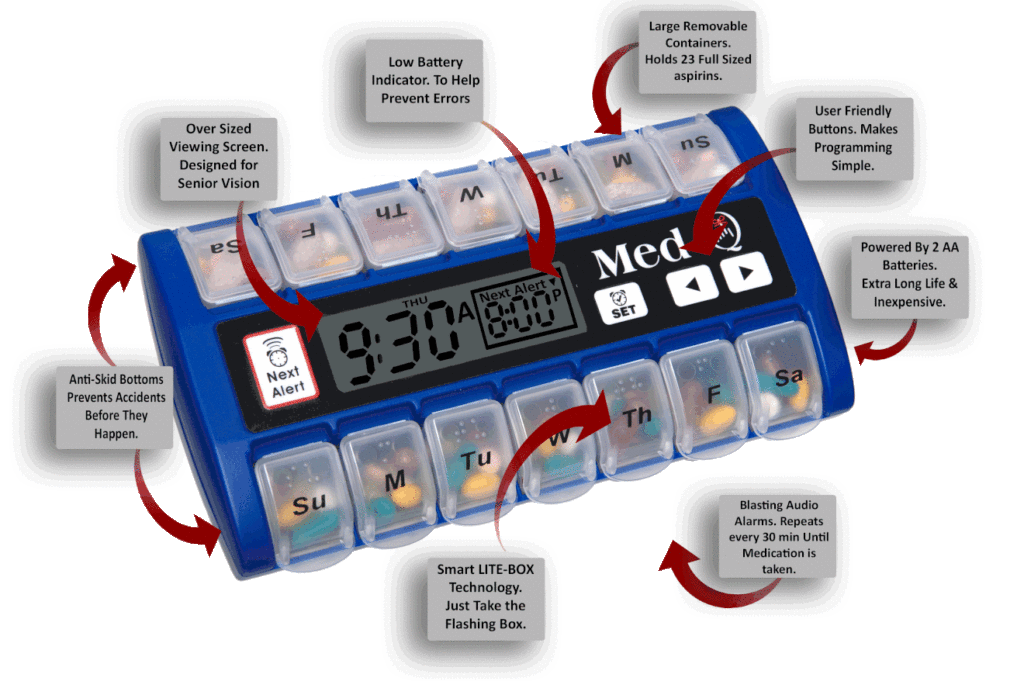
Medication Reminders For Dementia Patients
Medication reminders for dementia patients makes taking meds easier

Why is a medication reminders for dementia patients so important? Taking medication when you have dementia is a challenge. Furthermore, the same applies to the care giver and family helpers. : 12 ways to make it easier. First of all, trying to remember to take prescribed pills as directed is difficult at best. Seniors have a condition referred to as “Age Induced Medication Mistakes “(AIMM’s). A normal part of the aging process that is not the same as dementia. Hence the need for a automatic medication dispensers with alarms.
The problem will be made worse with the introduction of dementia. Maintaining the proper medication schedule will become increasingly difficult for people who have degrees of dementia. However, if the person is not taking the meds, it can be danger and even life threatening.. Med-Q Medication Compliance System has compiled a short list to help make Dementia safer and less stressful for everyone involved.
These are the most Common challenges to face:
1 – Degrees of Confusion

Men and women suffering with dementia are usually ingesting many kinds of different medication. For example, when there are other medical conditionsthat require treatment. Again, medicines have certain requirements. To illustrate, some need to be taken at certain times. Another example,. some pills need to be taken with food, and some without food. To sum up, it’s very easy to get confused and make mistakes.
2 – Pills and Tablets that are hard to swallow
First of all, prescription medications come in many sizes and shapes. Many pills are extremely large and are hard to swallow. This happens if the person with dementia is already struggles with swallowing liquids.
3 – Bottles and Blister Packs that are difficult to navigate and open
People’s prescription drugs come in bottles or blister packs. First, not good for frail hands. For example, senior who have some kinds of dexterity issues will struggle with opening bottles, Again, the same applies for blister packs. . The bottles are made difficult to open by design. Subsequently, to prevent the prescription medications from falling into the wrong hand. For example, mainly children. However, these sort of safety measures are needed. To sum up, these necessary safety measures will present extra challenges for people with dementia.
4 -Hence, One of the biggest medication problems, simply forgetting to take them
How big of a problem is medication non-compliance?
- Nonadherence with medication is a complex and multidimensional health care problem. Adherence is defined as the extent to which patients are able to follow the recommendations for prescribed treatments.
Missing a dose can cause huge problems. In addition, taking it twice or three times can send the Dementia suffer to the ER. Many overdose because they forgot they’d already taken it and take it again and again, Furthermore, this is one of the most common concerns families and caregivers express. To sum up, rightly so because it could cause the loved one great harm or even death.
Med-Q Medication reminder for Dementia offers these tips
1 – Provide cues
Fist of all, what kind of question? For example, post-it notes or other written messages in easily seen places around the house Caregivers will set an alarm clock or smart phone alarm to let them know they need to take pills. If there are no children or pets, try leaving the pills in a plastic cup with the time they’re supposed to take them. To illustrate, a cup for morning, afternoon, dinner time and bed time.Put the cups where they’re likely to be at that time. For example, morning pills could be left in the bathroom near their toothbrush, Another example, midday pills in the kitchen. Finally, evening pills on the night stand next to the bed.
2 – Use pill boxes and medication reminders for dementia patients
There’s a huge assortment of medication containers and medication reminders for dementia patients. First the medication reminders will help manage medication. The cheapest, a simple plastic pill boxes to super safe lockable medication reminders for dementia patients with alarms. The costs will vary widely. The old fashion 7 day medication organizer costs less than 5 dollars. The most expensive medication reminder will cost over 2000 thousand dollars. To sum up, it’s very important to do proper research. Finally, make certain you find the pill reminder that works for your particular needs..
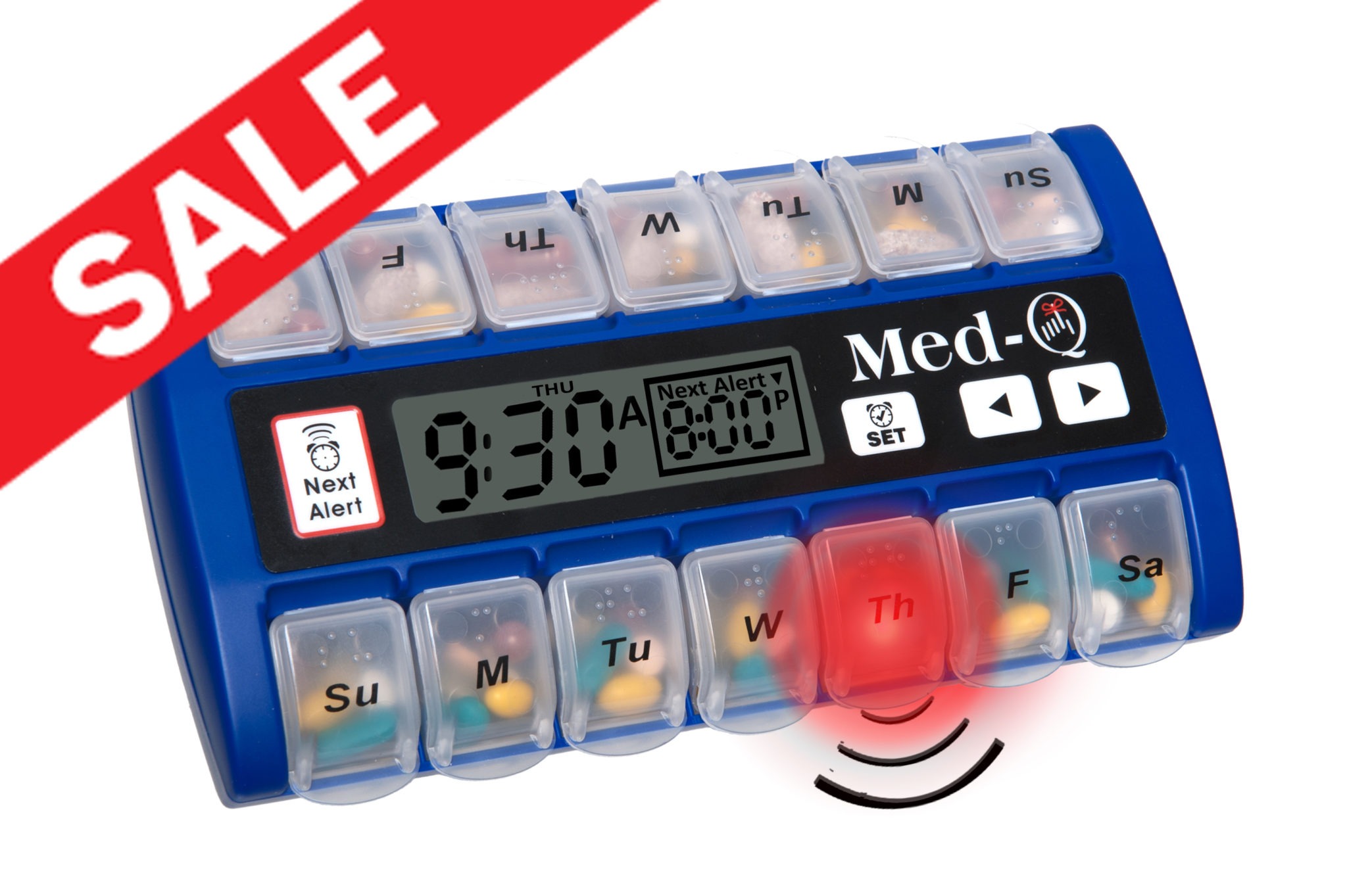
3 pill boxes and medication reminders for dementia patients
Old Fashion Pill boxes
Old fashion medication boxes have been around for centuries. A 7 day plastic containers in which you can place a dose of pills in a box for each day. These are pill organizer, not pill reminders, You can get pill boxes for morning, lunchtime, evening and night. These are cheap and easy to fill by afamily member or caregiver. However, to be effective, the person with dementia must have enough cognition to remember to take pills.
Pill box Medication Reminder with alarms

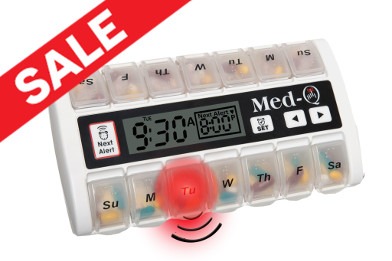
There are many medication reminders with alarms available. For example, the Med-Q Medication reminder for dementia suffer. A smart reminder will guide the user to the correct doses. If the person you care for forgets to take their pills, a smart reminder will repeat it’s alarms and reminders. They twill have an alarm (by sound or by vibrating) to alert the person that it’s time to take the pills.
Programmable Automatic medication dispensers with alarms and timers
These are Programmable Automatic medication dispensers with alarms and timers. Thes 21st century dispensers willl automatically drop the medication dose into a tray orcup. The Programmable Automatic medication dispensers with alarms and timers sounds an alarm each time to alert the person with dementia. First, these kinds of medication dispensers have a covered tray. Second, this is where only the dose that needs to be taken is available. Third, have 30 compartments. Finally, the compartments can last between 1 week or 1 month.
Start a reminder phone call strategy
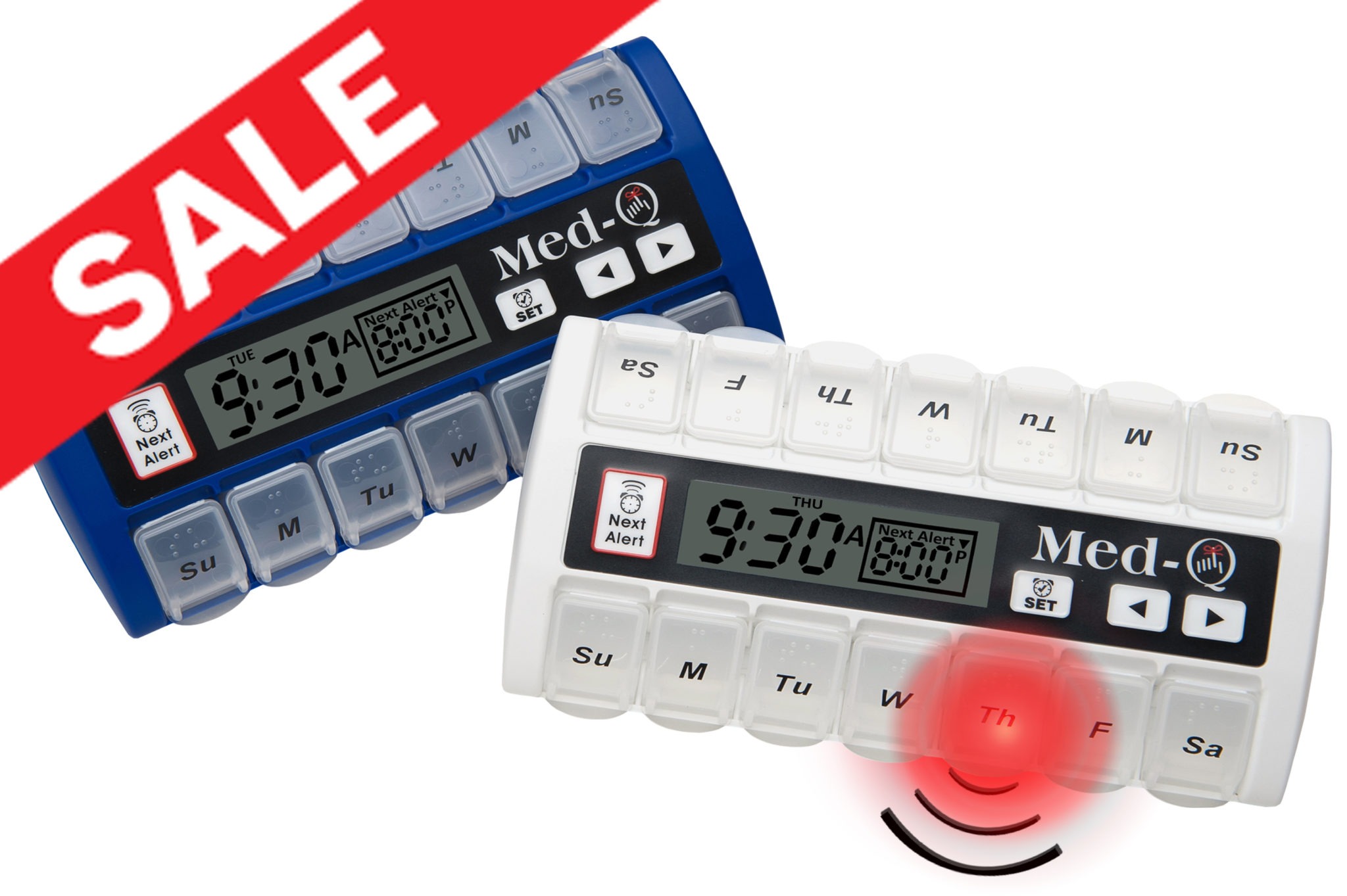
Many people rely on a phone call strategy. This can be frustrating for all those involved. Hence, research has shown this to be the moist ineffective method. First of all, it is very time consuming to have to call 2-3 or 4 times per day. However, calls may be the most straightforward way to ensure that prescription meds are being taken.
Making the “reminder phone call could help. Med-Q suggess, “Waiting on the phone while they take them”. However, you could also look into telecare. Telecare is when you pay professionals to make the phone call for you. The goal, check that medication has been remembered.
Get some outside help
A friendly neighbour would be helpful to make sure medication is taken. For example, the friend will help in the event that they are struggling to open pill bottles or blister packs. Again, let the neighbours know about your loved one’s condition. The goal, you can give them a call if you’re worried. Alternatively, many professional home carers can be put in charge of ensuring that the person with dementia remembers to take their medication.
Flashing LITE-BOX GUIDES Loved Ones to The Right Pills

A medication reminders for dementia patients is a must
Keeping on schedule with medication when you have dementia is a big challenge. Furthermore, every one needs help. Again, the same applies to the family caregiver and family helpers. To sum up, to remembering to take pills as directed can be done. To sum up, medication reminders for dementia patients is a life saver.
Finally, MED-Q medication reminders for dementia patients is the gift of Good Health and Weebien for Loved One’s
To sum up, Med-Q Smart Medicine automatic pill dispenser alarm reminder offers a 100% Guarantee. Smart pill box with alarm and timer offers FREE Standard Shipping & Handling. At last, Award Winning Customer Service.
[cherry_sharing networks=”facebook,googleplus,pinterest,stumbleupon,reddit,twitter,linkedin,tumblr” style=”only-logos”]