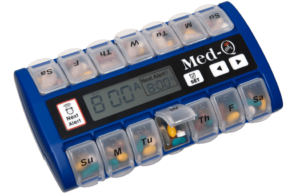
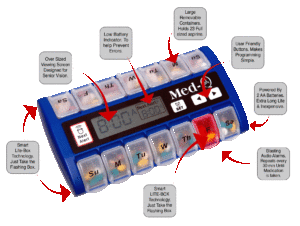
Med-Q Pill BoxOlder patients frequently have issues with polypharmacy and other medication errors. First, Polypharmacy is the concurrent use of multiple medications by individual man or women patient. Second, Polypharmacy is typically found in seniors. Third, up to 45%of seniors are still living at homes. In addition, around 20% of adults with intellectual cognitive disability (alzheimer’s & Dementia) are also dealing with the issue. The reasons for polypharmacy are many.Polypharmacy is not always a problem. However, many times,. meds can be unhelpful or presenting too high of a level of risk for small benefits. Therefore, doctors and pharmacists ought to consider the specific situation. Furthermore, this requires monitoring and review. Again, never have a pill box or pill dispenser filled with medications that are not necessary. Concerns about polypharmacy:
Raised risk of adverse drug reactions,
A Prescription Medication prescribing cascade,
Much higher costs
The reasons for polypharmacy are many To sum up, Polypharmacy is linked to a decreased quality of life, including actual increased mobility as well as congantive losses.
Limited communication will often lead to medication overlap or overkill
First, doctors are quick to prescribe pills. In fact, in modern American medicine, doctors will usually prescribe first. Hence, little conversation regarding potential lifestyle changes. The cause, aggressive advertising by pharmaceutical companies getting men and women to walk into doctors’ offices expecting to leave with the advertised drugs. Uniquelt, the problem is worse with children. However, doctors and PA’s are debating the full extent of overmedication in children.
Dr. Robert Grundmeier is the director of clinical informatics with the department of biomedical and health informatics with Children’s Hospital in Philadelphia, PA
“The problem is a lot of the psychotropic medications that we use in pediatrics have not been studied in combination with other treatments,” says Dr. Robert Grundmeier, a pediatrician and director of clinical informatics in the department of biomedical and health informatics at the Children’s Hospital of Philadelphia. “So the safety … is not known.”
To illustrate, roughly 20% of kids are currently taking some kind of psychotropic medications . For example, Prescription ADHD pills to antidepressants.. Additionally, research showed, nearly 48 Thousand kids, ages 3 to 18, were put on psychotropic medications protocoles (From 2000 to 2014).
Grundmeier presented the studies initial findings
Doctor Grundmeier has presented initial findings of his research. The data was made public at the yearly meeting of the Pediatric Academic Societies. In any event, Pediatric Academic Societies is an international conference focused on world-wide kids newest health research. Hence, upto date result regarding the reasons for polypharmacy.
Grundmeier hopes to offer doctors information needed to properly step-down medications.
Medical care step therapy is an approach to prescription intended to control the costs and risks posed by prescription drugs. Firstr, the practice begins medication with the most cost-effective drug therapy. To sum up, prior to progresses to other more costly or risky therapies only if necessary.
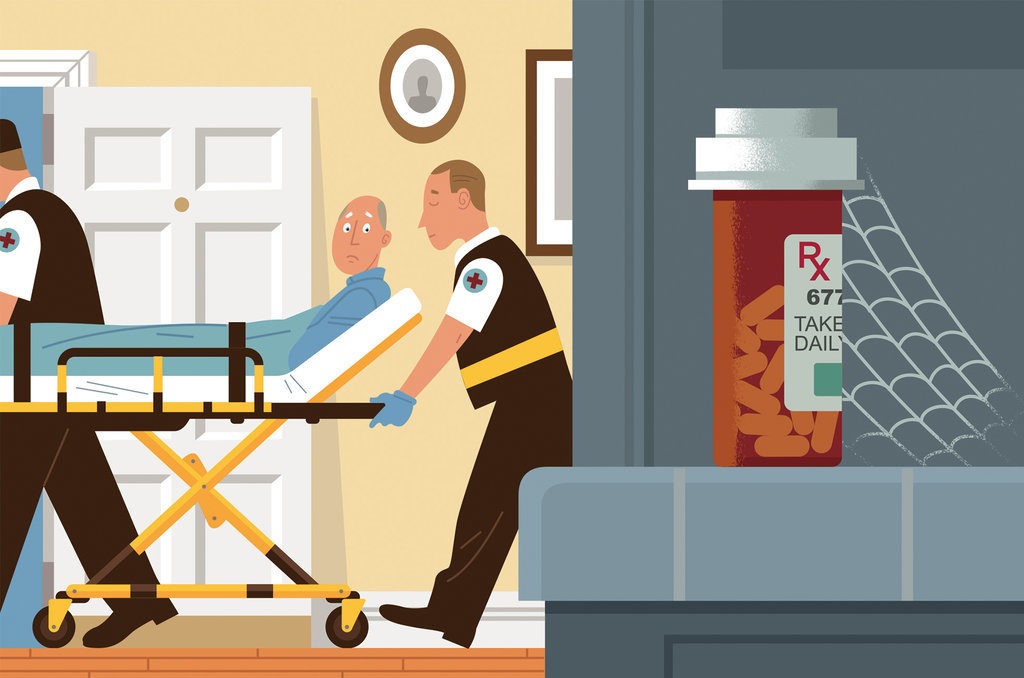
To sum up, For both adults as well as children, prescription medications as well as vitamins and supplements are not always good. In fact, pills have positive or detrimental effects based on how they’re prescribed as well as managed. Management is supplied by, providers, patients and family members. For example,an overloaded pill box or pill dispenser filled with pills that are no longer necessary or even harmful.
Three Tips to Prevent Medication errors
1. Use a smart pill box with alarms or programmable pill dispenser.
First, make sure that all the pills in the smart pill box are not expired. Second, make a list of each and every pill, supplement and vitamin in the pill dispenser. For example, the healthcare professional may find two pills to treat the same condition. A smart medication dispenser has two benefits
Preventing forgetting to take pills at the directed time
Stops the Overdosing that comes with an Old Fashion Pillbox
This simple step, reduces the concerns about polypharmacy and its problems.
2. Ask the Doctor about the combination of different pills
Take a proactive stance with the meds. For example, diabetes and high blood pressure patients may be taking two different medications. To illustrate, users are often able to take just one pill. The one pills will contain medications for both illnesses. The top benefit of combination pills is for convenience. In addition, fewer pills in a pill box or pill dispenser lessens chances for mistakes. For example, taking pills at the wrong time or triple dosing. To sum up, it is obvious improved safety over taking individual medications will prevent crisis .
3. Become part of the Medical Review Team.
Whereas, many people will be struggling to keep up with their doctors’ directions. At the same time,a wrong combos of [pills in the pill box or pill dispenser is common. This being said, health care providers will tell you ,”A patient should never make the decision to cut back on medications unilaterally without the doctors “OK”.
Dr. Moreno says again and again, “Never be afraid to ask the doctor about anything that has been prescribes. Fact, it can and will ultimately affect your health – for better or worse”.
Finally, the reasons for polypharmacy are many. Again, always take extreme caution fin trying to reduce the number of prescribed medications. Furthermore, talk to their doctor first” before making any changes in the medication protocol. Remember, many kinds of medications, can’t be safely stopped cold turkey. To sum up, patients must ask their doctor to make sure that they are taking indicated, evidence-based medications. Subsequently, make sure the meds have been shown to improve their personal health outcomes.
Finally, a take a proactive stance on the many reasons for polypharmacy. Med-QSmart programmable pill dispenser with alarms is the medication dispenser.

 2. Ask the Doctor about the combination of different pills