
Taking too many prescription drugs can be risky for seniors

Taking too many prescription drugs can be risky for seniors

She just celebrated he 75th birthday.  Sonya, a recently widowed former secretary, began not feeling well.  First of all, she was always tired. Second, she was having stomach cramps.  Third, she was losing patience and becomeing mor amnd more agitated. Fianlly, she was getting very forgetful.  Her grown children urged her to see a  memory specialist in Memphis, not far from where she lived.

“Every time I went in to a doctor, they gave me another pill,”

Sonya’s cognitive status was normal.  In fact, the doctor said they were very good.  However, the real hazard was hidden.  The problem, her medicine cabinet was filled to the overflow.  She was taking 18 daily pills.  The pills ranged from different prescription, for diabetes, high blood pressure and her to aid with kidney function.

There was an assessment made.  The results led to medication changes.  The team was made up of a clinical pharmacy specialist (Well versed in drug negative drug interactions), she’s now down to eight.

Sonya has become  less agitated as well as being in a stae of confusion.  Her nausea has disappeared She’s more energetic and doesn’t’ tire as quickly.

That overload of drugs, known as polypharmacy, can be dangerous at any age but it’s particularly hazardous for elderly people, who often have multiple health conditions and whose bodies may not handle meds the same way they did when they were younger, said Nicole Brandt, a leading expert on geriatric prescribing at the University of Maryland.

sponsored by Med-Q Medication Compliance System

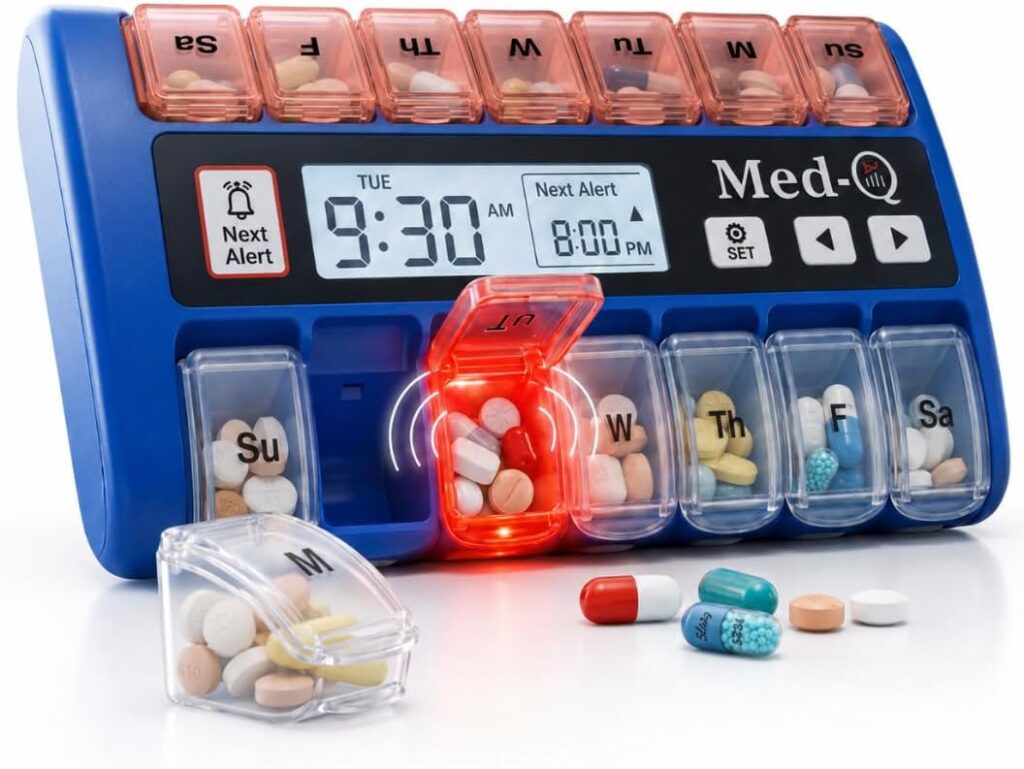
pillbox with alarm

That can aggravate or cause a host of harms ranging from heart and blood pressure problems to being groggy or unsteady, which increases the risk for falls. Too many drugs and interactions can raise the risk of dementia, or worsen the confusion and memory fog of someone who already has some cognitive decline, experts in aging and medicine said. Or, as in Argie’s case, all those drugs can make a mild impairment appear far more serious.

It’s not uncommon.

Too many pills, too many interactions

“You have to be really, really strategic about how you prescribe medications, because you might be worsening other things in the long run or the short run,”

prescription drugsSaid Jonathan Watanabe, chair of the Department of Clinical Pharmacy at the University of California at San Francisco.. Dr Watanabe is an expert in the field of  geriatric prescribing.   First of all, he warns about seniors  getting  drugs that may have negative interactions.  Second of all, it might lead to a senior taking a medicine longer than the prescriber intended. “It gets sort of stuck on their patient profile in perpetuity,” said the Doctor.

The dangers from the problem of polypharmacy are well recognized. The American Geriatrics Society has set created a “benchmark” for being able to safely prescribe senior’s medication.Doctors, nurses and other health care proffesionals ought to  be more ccareful when it comes to  “medication reconciliation,”.  Yes, this means checking every medication a patient takes.  An update medication list is a must.  Yet overprescribing and the harms it causes persist, researchers have found.   Providers may know about over-the-counter-pills, vitamins or other supplements which can make things worse.

“Care transitions, say from a nursing home to a hospital or vice versa, are high risk times for many reasons, and risks multiply because the two settings use totally different electronic record systems”

,Alice Bonner, a PA has worked on national models for safe prescribing. It gets even more challenging if the patient’s first language is not English.  “
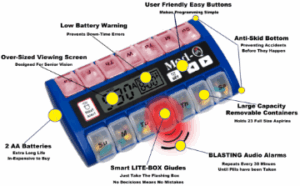
 

pill boxThe first question, are they able to take their medications as prescribed by their healthcare proffesional?  Is their regimen too complicated? Does it need to be simplified? Do the need a digital pill box with alarms that reminds and guides

Other questions need to be answered.  For example,  they understand why it is being doesed that way?  Many times patients don’t  realize their Lasix is just  a brand name.  This pill is prescribed for congestive heart failure.  They do not know that it is the same thing as furosemide.  Many will wind up taking both the genirica nad name brand. the generic, they might end up taking both.

Medication reconciliation

Ideally, health providers do undertake “medication reconciliation.  This is the term for, ” to figure out what’s helpful and what’s not” .   Using modern techoligy is the key.  Everything from a computerized medication list to a medication reminder with built in alalrms needs to be used.  That’s what helps senior stay healthier and witha bertter Quiality of life.   Bu it doesn’t always happen. And even in a top-notch system or home caregivers, things are often missed.

“People accrue medicines, right? Especially if they’re seeing multiple providers, that medicine list just grows,” said Susan Parks, director of geriatric medicine at Thomas Jefferson University in Philadelphia. Patients there are given a marked brown bag to bring in everything they take, prescription and non, so it can all be assessed. Some drugs are “deprescribed,” with explanation and reassurance that the patient is better without them. And sometimes patients and providers weigh trade-offs. For instance, a patient might want to stay on a drug for incontinence despite some chance of dizziness or confusion. And providers can then help minimize risks.
If you can’t remember whether you took your medication, what do you do?

What happens if you don’t remember if you took your medications?  When one is not sure if you took a pill, never, ever just take another dose yet. What could happen if you double dose?  If someone ingests an additional dose, the consequences can be deadly. In fact, an extra dose can raise the risk of harmful effects. Check your pill organizer, count the remaining pills in the bottle, or review the instructions that came with your prescription to find specific guidance. 

doctorHealth care profsionals are in agreement, “For most medications, it is safer to accidentally miss a single dose than to double dose” . Keep in mind that the pill/dosing guidelines vary drastically depending on the medication.  For example, it is different for  blood thinners or something like birth control.), it is always best to double-check with a professional.  If in doubt, call the local pharmacy you got the prescription filled.  Also, call e the America’s Poison Centers at 800-222-1222 .  This can help if you are concerned about over dosing. 

For further guidance, consult I can’t remember whether I took my medication, what do I do? on Medical News Today. To help prevent confusion in the future, you can implement some 9 Simple Strategies for Remembering To Take Your Medication or read the Why You Shouldn’t Skip Your Medication guide on WebMD.
 
If you are missing doses consistently, a few strategies can help get your routine back on track:
  • Use a weekly pillbox: These old fashion pill holders can be useful.   They show a quick visual cue to show which days  doses have been taken.
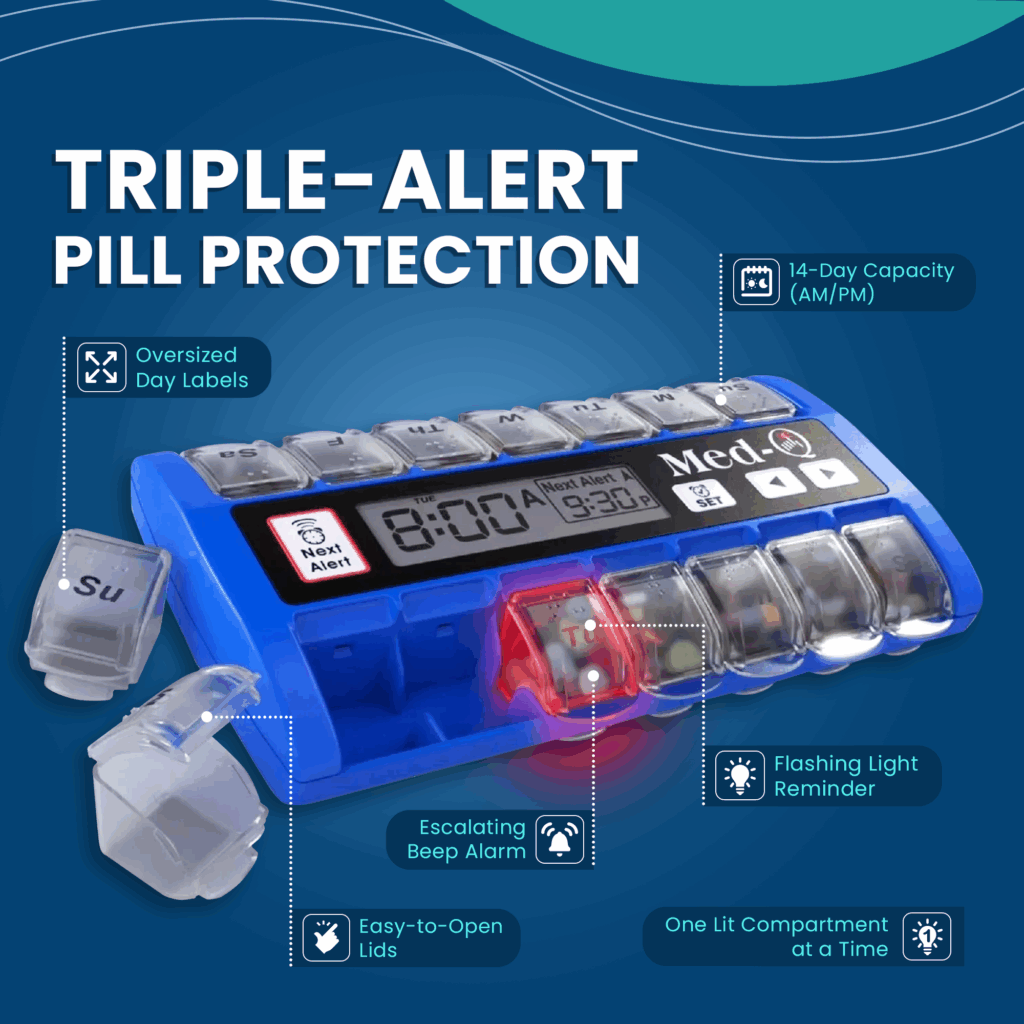
  • Use a Digital Pill Reminder: Medication reminders, like the Med-Q pill Box. have flashing guides.  These alarmed reminders help preventing over dosing. 
  • Try to do Habit stacking: Match up your daily pill-taking with a non-negotiable daily habit.  For example, your first cup of coffee or brushing yourhair.
  • Set electronic reminders: Use persistent reminder apps, alarm clocks, or simple smart phone alarm reminders.

What to do if Unsure?

The worry about over doing is real.  When unsure whether the dose has been taken, the best thing to do is speak with your health care provider or even your pharmacist. They will  advise you on the best course of action based on ythe specific medication. that is over dosed.

pill box for seniors

If you take oral tablets or capsules, you can count how many pills you have left. If you know when you started taking the pills out of that prescription bottle, this could help you determine whether you’ve taken your dose for that day.

Sometimes, when you haven’t taken your medication, there may still be time to take that dose. However, this could depend on the drug and dosing schedule.

Although in some cases, if it’s almost time to take your next dose, your doctor may recommend skipping the missed dose and taking your next dose at its regular time. Never take two doses at once to make up for a missed dose as doing so could raise your risk of side effects.

What happens if you accidentally take your medication twice?

Do not take more of a drug than your doctor prescribes. While serious side effects may be rare, for some medications, taking more than the recommended amount may lead to harmful effects or overdose. Some of the most dangerous medications to double-dose include:

  • heart maintenece medications
  • ADHD drugs, for example “Adderall”
  • medications for Type 1 Diabetes
  • prescription narcotic pain pills
  • psychiatric medications , for example “Wellbutrin.”

If you have any doubt, act quickly. 

Fist of all, contact your doctor right away.  Let them know you may have accidentally taken two doses or three doses of your daily medication. They will offer up advice.  The Healthcare profesional can often advise of what steps to take.  Also, they will let you know about symptoms to watch out for.

pill dispenser
America's #1 Pill Dispenser with Triple Alarms

Recent Tips

Scroll to Top