[mpsl slider56e2e2c745ee7]
Med-Q medication reminder alarms prevents Mistakes
Most Common Medication Mistakes and the best ways to Avoid Them.
Taking Too Many Pills. The Problem: Overdosing remains the #1 cause of medication related deaths. This was reported by the FDA study about drug errors. For example, the top Prescription drugs that have the most chance of abuse are the most common culprits. Other Examples, prescription painkillers like: Ocecotyn. Another example, , anti-anxiety prescriptions such as Xanax.
Moreover, stimulants like Aderall can cause problems. In fact, people are able to overdose on any kind of prescription medications. In fact, overdoses of the commonly used medication Tylenol have been linked to as many as 1,300 fatalities in 2015. Reported by the FDA in a report by ProPublica
Some older adults are unable to use med-q medication reminder alarms with Locks or without locks
In fact, Seniors need to take all their medications properly. By the same token, depending on which medications are missed, this can cause serious effects on an older person’s health. In addition the cost of medications. Even with prescription drug coverage provided by Medicare Part D, the monthly costs of medications can be high. This is a burden for older adults. Conversely, often have limited financial resources.
It can also cause people to skip taking certain medications. In addition many will not fill prescriptions for more expensive medications. An example, inhalers.
There are of course many other medication-related problems that can occur. Especially when hospitalizations or multiple doctors are involved. But the ones above are especially common when it comes to the primary care of aging adults.
Med-Q medication reminder alarms prevents Mistakes
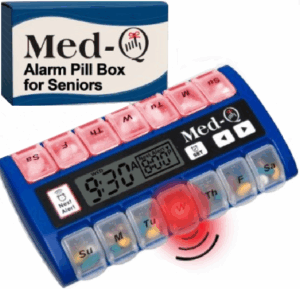
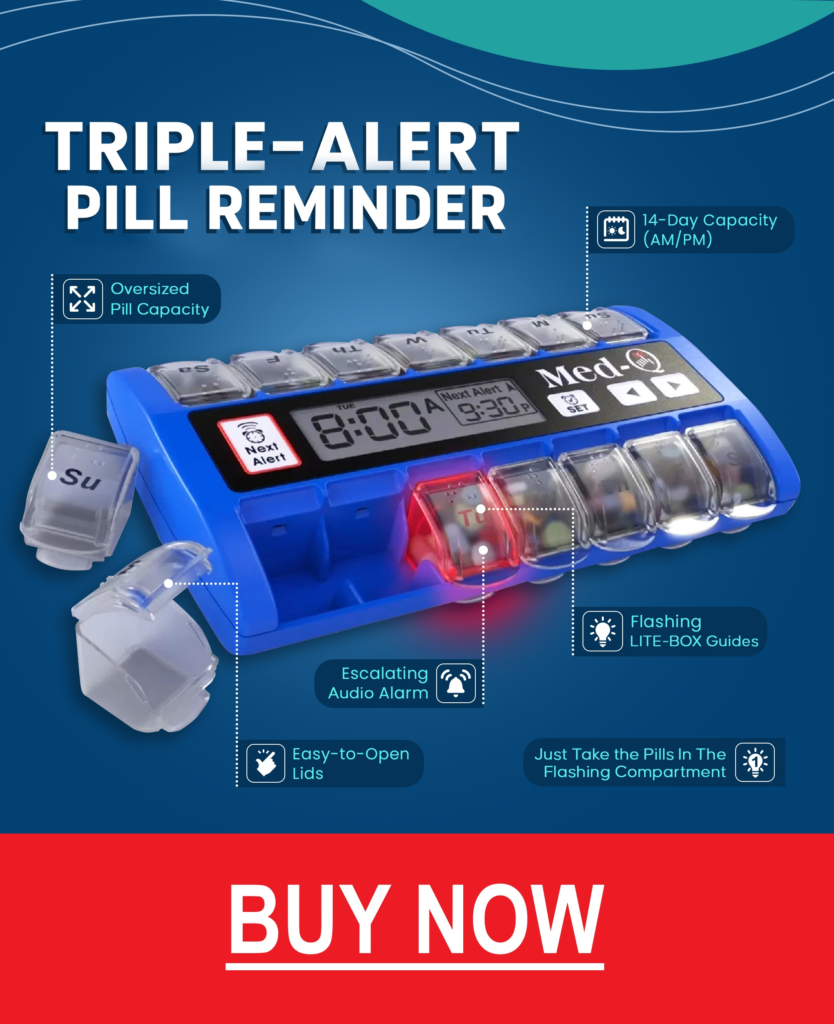
What You Can Do abut Medication Errors. Recognize your pills. In an ideal world, every older adult would have access to a reliable process for reviewing medications, ensuring that the benefits outweigh the risks and burdens, and monitoring for side-effects and problems. However, as many of you know, our healthcare system is not yet ideal for aging adults. So if you are caring for an older person and want to be proactive about checking on medications. Here are some specific things you can do. First, get the med-q medication reminder alarms.
Review the Beers List of Potentially Inappropriate Medications for Older Adults. See if your older relative is taking medications on the list. This document includes a comprehensive list of “anticholinergic” drugs. Included should be other medications that are especially risky for the elderly.
Don’t panic if you discover that an older person is taking a medication on the Beers list.
Do plan on discussing with the doctor. You’ll want to understand why the benefits are likely to outweigh the burdens, and you can also ask if a lower dose is possible. You can also review “Ten Medications Older Adults Should Avoid or Use with Caution,” authored by the American Geriatrics Society. This document highlights ten especially commonly used medications. Theses can often be stopped or reduced with the med-q medication reminder alarms.
Most Common Medication Mistakes and the best ways to Avoid Them.
Taking Too Many Pills. The Problem: Overdosing remains the #1 cause of medication related deaths. This was reported by the FDA study about drug errors. For example, the top Prescription drugs that have the most chance of abuse are the most common culprits. Other Examples, prescription painkillers like: Ocecotyn. Another example, , anti-anxiety prescriptions such as Xanax.
Moreover, stimulants like Aderall can cause problems. In fact, people are able to overdose on any kind of prescription medications. In fact, overdoses of the commonly used medication Tylenol have been linked to as many as 1,300 fatalities in 2015. Reported by the FDA in a report by ProPublica.
Med-Q 45-Day Money Back Guarantee. FREE Standard Shipping & Handling. Award Winning Customer Service.
[cherry_sharing networks=”facebook,googleplus,pinterest,stumbleupon,reddit,twitter,linkedin,tumblr” style=”only-logos”]
 Health care profsionals are in agreement, “For most medications, it is safer to accidentally miss a single dose than to double dose” . Keep in mind that the pill/dosing guidelines vary drastically depending on the medication. For example, it is different for blood thinners or something like birth control.), it is always best to double-check with a professional. If in doubt, call the local pharmacy you got the prescription filled. Also, call e the