The Cost of Not Taking Your Prescription Medication
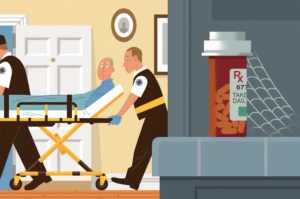 The Cost of Not Taking Your Prescription Medication is huge.
Did you know that there is an out-of-control medication error epidemic in the United States. First, these mistake costs more and has an effect on more men and women than any of the diseases that Americans are worrying about. Second, the problem is called Medical Non-Compliance.
- Non-Compliance: Failure or refusal to comply. In medicine, the term non-compliance is commonly used in regard to a patient who does not take a prescribed medication or follow the directions of the health care professionals directed medication regiment. A person who demonstrates non-compliance is said to be non-compliant.
To sum up, mistakes are 100 percent preventable. From a live in care giver to an automatic pill box reminder, mistakes can be prevented.
America’s other Drug Problem
The size of the problem is staggering. Previous US Surgeon, Genera,l C. Everett Koop, said this, “Medication will not work in individuals who are not take them.” This is one of the reasons why some of the new drugs that perform fantastic in clinical studies. The reason, the users are monitored. This in turn makes sure they follow doctors’ orders. Finally, when the drug hits the commercial market, compliance issues come into play. Again, the perfect time for an automatic pill box reminder. With a smart automatic pill reminder, mistakes can be prevented.
Equally important, it explains why many men and women just don’t get better. Many will suffer a surprising relapses or even die. To sum up, given drug prescriptions should keep their disorders under control.
The Cost of Not Taking Your Prescription Medication
The question, why aren’t seniors taking their pills?
Doctor. Liza Rosenbaum , ( cardiologist at Brigham and Women’s Hospital in Boston), asked her patients who had suffered a heart attack why they were not taking their medications., Example of Dr Rosenbaum responses:
- We can’t Remember”
- “I’m guessing that I’m just old-fashioned”
- “Just don’t take medicine, I feel fine
- “Don;t need it ”
- “I’m not a pill person.”
First, new research has show that, “Medications remind people that they’re sick. Second, no one wants to be sick.
Patients view medications as “chemicals” or “unnatural.”
For example, one women told Doctor Rosenbaum that before her heart attack, she’d switched from the doctor prescribed statin to fish oil. Fish oil pills, unlike statins has not been proved to lower cholesterol and stabilize arterial plaque. The reason, a big societal push to do things naturally. People feel that they can put an emphasis on diet and exercise. Many are truly convinced that they don’t have to take medications.
Senior will try to do a self test. First, they stop taking the medications for a 10-15 days. Second, if they don’t feel any different, they don;t resume the medications. In fact, the never fill the automatic pill box reminder. Typical for medications for‘silent’ conditions. To illustrate, heart disease and penser-for-alzheimers/”>high blood pressure. Finally, the consequences may not appear right away. Finally, it will often result in serious long-term harm.
Patients do their own cost-benefit analysis
Statins are inexpensive and the data shows huge payoffs. However, people don’t see arteries as a serious problem. Again, people jus don’t think it’s worth taking the pills. Many will hear others talking about negative side effects. These events will most certainly drive down the chance of proper compliance.
Cost is another major factor. The data has shown that if a co-pay hits 50 dollar, adherence really drops drastically, When a medication is very expensive, like biologics used in rheumatoid arthritis treatmentss that cost $4-4,500 a month, patients are less likely to take them. In addition, many will take less than the directed dose. Hence, rendering them much less effective. For example, Aetna offered free medications to patients who had survived a heart attack. These patients showed a, 6.8% increase in adherence. Furthermore, were 11.5% fewer strokes and heart attacks.
People are Forgetting to take their a prescribed drug everyday. It is a common problem. This is made worse for people with AIMM’s (Age Induced Medication Mistakes). It is worsened by an ambivalent about taking medication. Patients can use various devices, including smartphones, pill box reminders to help them to take the next dose. Other use a buddy system to make medication adherence a group event or challenge. To sum up, medication mistakes are totally preventable. From a live-in care giver, automatic pill box reminder, or a list of other aids, mistakes can be prevented.
[cherry_sharing networks=”facebook,googleplus,pinterest,stumbleupon,reddit,twitter,linkedin,tumblr” style=”only-logos”]