Drugs for problems associated with Alzheimer’s

Drugs for problems associated with Alzheimer’s

First of all, there are Drugs to treat problems associated with Alzheimer’s.

Drugs to treat problems associated with Alzheimer’s

Second, designed for treating the memory and thinking problems associated with Alzheimer’s disease. Third of all. for many individuals they seem to help. For example, with certain kinds of neuropsychiatric symptoms found with Alzheimer’s. Finally, Med-Q Medication reminder with Alarms and flashing guides recommends you visit Medications to Treat Alzheimer’s & Other Dementias.

Neuropsychiatric symptoms in AD include psychosis (delusions and hallucinations) as well as affective and behavioral changes such asdepressive mood, anxietyirritability/lability, apathyeuphoria,disinhibitionagitation/aggression, aberrant motor activities, sleep disturbance, and eating disorder

Drugs to treat problems associated with Alzheimer’s

What is the Evidence for it’s clinical efficacy:

In short, there is no magic fix for Alzheimer’s. In fact, recent studies has shown some specific data Hence, the clinical research has shown that there is “limited evidence for clinical efficacy.” Furthermore, these kind of Alzheimer’s drugs offer a noticeable difference. However, it’s not clear that they overall improve in levels of agitation have been reduced. In addition, difficult behaviors in most people has not been reduced as well.. It is also not clear that they work as well as or better than antipsychotics. To sum up, the jury is out on the long-term management of behavior problems.

[cherry_sharing networks=”facebook,twitter,googleplus,pinterest,linkedin,stumbleupon,tumblr,reddit” style=”only-logos”]

Are there Benzodiazepines in the Medication reminder with Alarms and flashing guides? This is a category of medication that relaxes people. Therefore, these pills are used for anxiety and panic attacks in Alzheimer’s sufferers. In addition, for sedation and for treating insomnia. Finally, be careful. These meds can easily become habit-forming and lead to addiction.

Common Drugs to treat problems associated with Alzheimer’s are found in a Medication reminder with Alarms and flashing guides for older adults:

What are the Usual effects of this type of medication?

  • Lorazepam (The brand name is Ativan)
  • Temazepam (The brand name is Restoril)
  • Diazepam (brand name of Valium)
  • Alprazolam (brand name Xanax)
  • Clonazepam (It’s brand name is Klonopin)

Benzodiazepines act similarly to alcohol

Benzodiazepines vary in how long they last in the body: alprazolam is considered short-acting whereas diazepam is very long-acting. However, there is a Risks of use. The risk, addition. Furthermore, people of all ages, they can easily cause both physical dependent. Consequent;y, they can become psychological dependence. There are Additional risks for seniors. The risk that get worse in older adults with Alzheimer’s include:

  • Increased chances of having a falling event
  • Paradoxical agitation is when older adults become disinhibited. In addition, they will become much more restless with these medications
  • Increased levels of daily confusion
  • Causing or worsening of the symptoms of delirium
  • Possible acceleration of cognitive decline and thinking and speaking skills

There is a risk of worsening dementia symptoms

Drugs to treat problems associated with Alzheimer’s are not risk free.First, there is a risk involved. Second. older adults who take benzodiazepines regularly, have a higher level of risk for the worsening dementia symptoms. Again, this is magnified when the drug is reduced or stopped entirely. For example, people will often experience raised anxiety levels, Consequently, it will lead to discomfort due to physical withdrawal. To sum up, these worsens their cognitive decline.

Stopping benzodiazepines suddenly can provoke life-threatening withdrawal symptoms. Obviously, speak to you health care professional before making any decisions.

Med-Q Medication reminder with Alarms and flashing guides recommends you visit:

reminder with alarms and flashing

Med-Q reminder with alarms and flashing

Drugs to treat problems associated with Alzheimer’s

Alzheimer’s Medications

Alzheimer’s helper

Alzheimer’s Behavior Problems

If you can’t remember whether you took your medication, what do you do?

What happens if you don’t remember if you took your medications?  When one is not sure if you took a pill, never, ever just take another dose yet. What could happen if you double dose?  If someone ingests an additional dose, the consequences can be deadly. In fact, an extra dose can raise the risk of harmful effects. Check your pill organizer, count the remaining pills in the bottle, or review the instructions that came with your prescription to find specific guidance. 

doctorHealth care profsionals are in agreement, “For most medications, it is safer to accidentally miss a single dose than to double dose” . Keep in mind that the pill/dosing guidelines vary drastically depending on the medication.  For example, it is different for  blood thinners or something like birth control.), it is always best to double-check with a professional.  If in doubt, call the local pharmacy you got the prescription filled.  Also, call e the America’s Poison Centers at 800-222-1222 .  This can help if you are concerned about over dosing. 

For further guidance, consult I can’t remember whether I took my medication, what do I do? on Medical News Today. To help prevent confusion in the future, you can implement some 9 Simple Strategies for Remembering To Take Your Medication or read the Why You Shouldn’t Skip Your Medication guide on WebMD.
 
If you are missing doses consistently, a few strategies can help get your routine back on track:
  • Use a weekly pillbox: These old fashion pill holders can be useful.   They show a quick visual cue to show which days  doses have been taken.
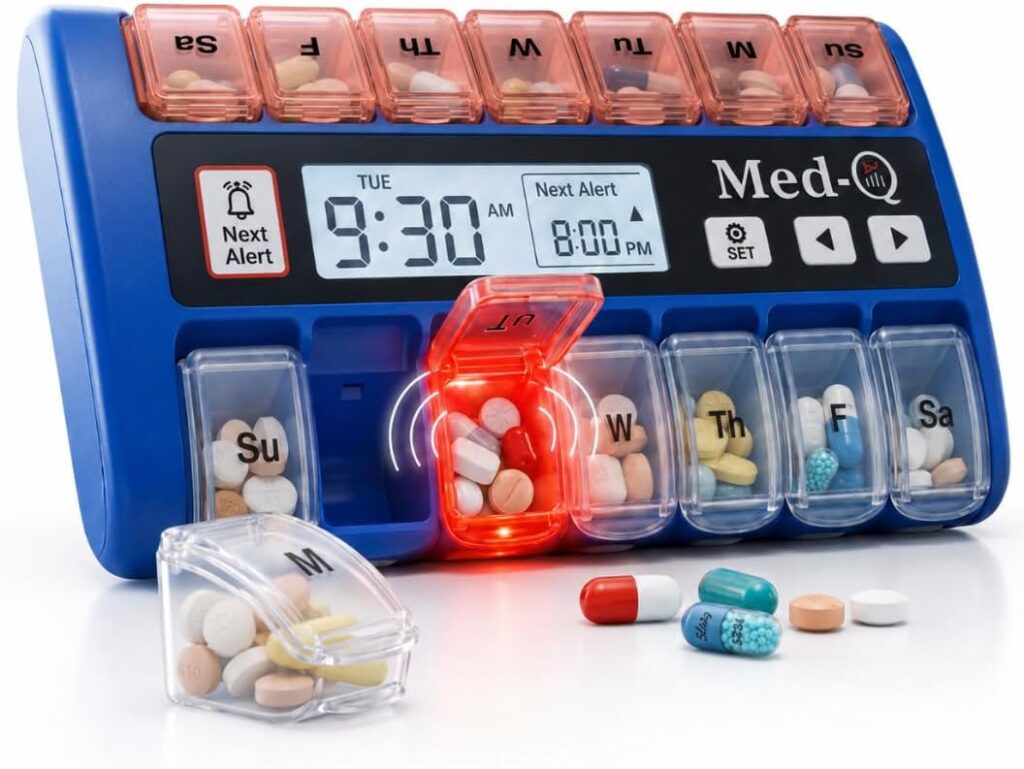
  • Use a Digital Pill Reminder: Medication reminders, like the Med-Q pill Box. have flashing guides.  These alarmed reminders help preventing over dosing. 
  • Try to do Habit stacking: Match up your daily pill-taking with a non-negotiable daily habit.  For example, your first cup of coffee or brushing yourhair.
  • Set electronic reminders: Use persistent reminder apps, alarm clocks, or simple smart phone alarm reminders.

What to do if Unsure?

The worry about over doing is real.  When unsure whether the dose has been taken, the best thing to do is speak with your health care provider or even your pharmacist. They will  advise you on the best course of action based on ythe specific medication. that is over dosed.

pill box for seniors

If you take oral tablets or capsules, you can count how many pills you have left. If you know when you started taking the pills out of that prescription bottle, this could help you determine whether you’ve taken your dose for that day.

Sometimes, when you haven’t taken your medication, there may still be time to take that dose. However, this could depend on the drug and dosing schedule.

Although in some cases, if it’s almost time to take your next dose, your doctor may recommend skipping the missed dose and taking your next dose at its regular time. Never take two doses at once to make up for a missed dose as doing so could raise your risk of side effects.

What happens if you accidentally take your medication twice?

Do not take more of a drug than your doctor prescribes. While serious side effects may be rare, for some medications, taking more than the recommended amount may lead to harmful effects or overdose. Some of the most dangerous medications to double-dose include:

  • heart maintenece medications
  • ADHD drugs, for example “Adderall”
  • medications for Type 1 Diabetes
  • prescription narcotic pain pills
  • psychiatric medications , for example “Wellbutrin.”

If you have any doubt, act quickly. 

Fist of all, contact your doctor right away.  Let them know you may have accidentally taken two doses or three doses of your daily medication. They will offer up advice.  The Healthcare profesional can often advise of what steps to take.  Also, they will let you know about symptoms to watch out for.

pill dispenser
America's #1 Pill Dispenser with Triple Alarms

Recent Tips

Scroll to Top