
[fusion_builder_container hundred_percent=”no” equal_height_columns=”no” menu_anchor=”” hide_on_mobile=”small-visibility,medium-visibility,large-visibility” class=”” id=”” background_color=”” background_image=”” background_position=”center center” background_repeat=”no-repeat” fade=”no” background_parallax=”none” parallax_speed=”0.3″ video_mp4=”” video_webm=”” video_ogv=”” video_url=”” video_aspect_ratio=”16:9″ video_loop=”yes” video_mute=”yes” overlay_color=”” video_preview_image=”” border_size=”” border_color=”” border_style=”solid” padding_top=”” padding_bottom=”” padding_left=”” padding_right=””][fusion_builder_row][fusion_builder_column type=”1_1″ layout=”1_1″ background_position=”left top” background_color=”” border_size=”” border_color=”” border_style=”solid” border_position=”all” spacing=”yes” background_image=”” background_repeat=”no-repeat” padding_top=”” padding_right=”” padding_bottom=”” padding_left=”” margin_top=”0px” margin_bottom=”0px” class=”” id=”” animation_type=”” animation_speed=”0.3″ animation_direction=”left” hide_on_mobile=”small-visibility,medium-visibility,large-visibility” center_content=”no” last=”no” min_height=”” hover_type=”none” link=””][fusion_text]
10 Things to Put in a Caregiver Toolkit
[/fusion_text][fusion_text columns=”” column_min_width=”” column_spacing=”” rule_style=”default” rule_size=”” rule_color=”” hide_on_mobile=”small-visibility,medium-visibility,large-visibility” class=”” id=”” animation_type=”” animation_direction=”left” animation_speed=”0.3″ animation_offset=””]
What should a caregiver keep in their Caregiver Toolkit
First, our aging population means chances are greater that you will become a family caregiver. Modern technology, like a smart pill box reminder will help. However, there are many more challenges then medication compliance. That is why there are things that should be kept in a Caregiver Toolkit. For example, a smart pill box. Another example, many have planned to become the family caregiver. However, it’s more likely that you were not prepared.. Care giving often starts small before morphing into a full-time job. Sometimes, it’s a sudden life change that you never saw coming.
A Real Life Example of why a Caregiver Toolkit is so important
Patricia Wally takes cares for her dad. who has Alzheimer’s as well as diabetes. “I managed a group home for disabled people for over a decade.” she told Med-Q smart pill box. “I didn’t fall into the care-giving role for my father because of my work. My 5 brothers and sisters told me, ‘YOU have no kids.’” Patty now cares for her dad. Care giving is both emotionally and physically challenging. Furthermore, it is also one of the most rewarding as well as selfless act. But it shouldn’t come at the expense of your own personal health and financial well-being.
[/fusion_text][fusion_text columns=”” column_min_width=”” column_spacing=”” rule_style=”default” rule_size=”” rule_color=”” hide_on_mobile=”small-visibility,medium-visibility,large-visibility” class=”” id=”” animation_type=”” animation_direction=”left” animation_speed=”0.3″ animation_offset=””]
Here are 10 tools for getting organized and balancing caregiving with self-care.
Proper Kinds of Documentation
Keep all of the important documents and contacts in a file box or safe. Hence, saves time and stress later if and when required. Items that ought to be including in a Caregiver Toolkit:
- names and phone numbers of family and friends
- What pills are in the smart pill box
- names and phone numbers for doctors and other healthcare professionals
- All health insurance information, including policy numbers
- Financial information that will include all banking info. Also, financial portfolio information
- living will, power of attorney, medical power of attorney, last will and testament
- A complete history of your last ten years of your own health history
For information that resides online, create a “bookmark” on your computer. This will give you easy access. Consider installing a password manager to safely store usernames and passwords. 25 % of people have a living will. Pete Carlson is well aware of the importance of legal documents and a living will. He was caregiver to his first wife, who had breast cancer , and then her second wife, who developed dementia.
“They need all their advance directives and legal documents in order as soon as possible because things can change very quickly,” he told Med-Q. “It’s a terrible thing to be making decisions as a group, especially in blended families.”
Proper Medication management
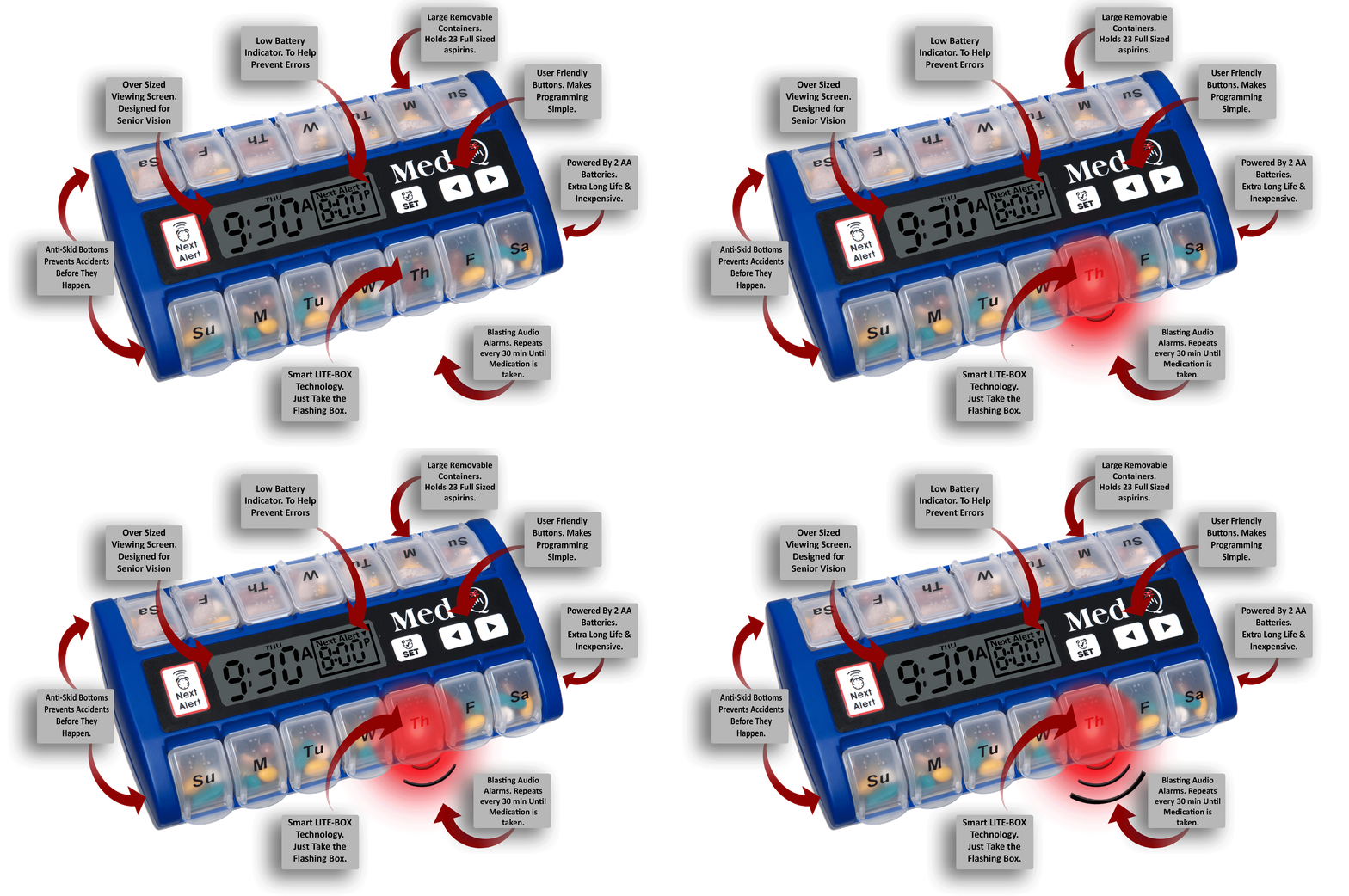
35% of seniors take at 5 plus prescription medications every day. Negative drug events cause almost 850 thousand ER visits every year. More so, over 100 thousand unnecessary hospitalizations each year. First, be proactive in medication management. For example, a smart pill; box with alarms like the MED-Q Pill Box. Caregivers are able to stop life-threatening emergency before they happen. Create a medication log or spreadsheet. It will also make your own life a bit easier.
List each of the medicines and also include:
- The health care professional that has prescribed it, when, as well as the reason
- the proper dosage
- the proper frequency of taking the pills
- the amount of refills as well as the dates for the refills

Always try to get prescriptions filled by just one pharmacy. If not, be sure to list the pharmacy that was used for each of the prescriptions meds. Keep the list in both the Caregiver Toolkit and a separate location in case of emergency.
Dietary supplements and over-the-counter medications can interact with prescription drugs, so include them in your log. Bring a copy of these with you to the doctor appointments.
Use a daily smart pill box with alarms and timer. The newest pill organizer have alarms that can be set. For example, Med-Q Pill Dispenser uses a combination of flashing guides and repeating alarms. The boast a 97% medication compliance rate. Finally, keep your smart pill box in a safe place.
Try using a Caregiver calendar
Care givers who use a planning calendar are more efficient. A calendar has been shown to be one of the most important thing to get better organized. A Color coded system has helped to easily pick out doctor appointments and other appointments. Hence, the ability to better plan.
Another type of care-giving calendar allows you to request help for family. The responsibility can be spread among the family through a smart calendar app. These new calender’s should be in every Caregiver Toolkit. Finally, even friends can take some of the responsibilities . This Caregiver Toolkit item can be track online.
Here are a few examples:
Caregivers use website like CarePages or CaringBridge to keep family and friends up to date. This works much better that attempting to tell the same stories. Also, not needing to answer the same questions over and over.
Senior Specific Home Accommodations
John McRaven has cared for several of his family members. He relied on his Caregiver toolkit filled with helpful assisting devices. For example, grab bars in a shower and by the toilet. He told MED-Q, “ I taught my Aunt to use safe-technique tricks to get dressed safely. Also, place a chair in the bedroom so they can sit when dressing.”
Falls are a huge problem among seniors. In 2015, over 2.8 million nonfatal falls were treated in the ER. In addition, 725 thousand plus needed in-hospital care.
Tips for Fall prevention
- Clean up the clutter and move the furniture so there’s room to walk safely.
- Remove all kinds of loose rugs. In addition, keep electrical cords out of traffic ways.
- Set Up nightlights and motion detection lights in dark areas.
- Add nonslip adhesive strips to stairways . Also, non-skid mats in all of the bathrooms.
- Put in handrails on both sides of stairs. For some, install a mechanical chair lift.
- Keep frequently used items within easy reach.
Have some “Me time”
First of all, for most, it happen slowly. In fact. so slow that many will not notice it. The results, pushing your own social needs in to the background. The newest research has shown that caregivers need some break time. Caregivers who used adult day care services or respite services have much lower stress and health issues. Caregiver burnout will lead to stress, anger, and depression. Even something as simple a friendly phone call will lower the distress of being a caregivers. Enhanced social support helps with caregiver burnout. Asking some “me time” isn’t never a selfish act. When you feel better, you’re a better caregiver, too.
Giving pleasure to a patient will often give feelings of well-being for the caregiver. If the care giver takes time to listen and acknowledge their feelings, they will start to feel a heighten sense of security. Just talking kindly often improves happiness. Also, reduce stress level as well as feeling of anxiety.
“You have to respect them,” said MED-Q Medication Compliance System. Caregivers should never treat the person as thought they are an invalid. Again, never, ever talk down to them or treat them like a child.. This would be very demoralizing for seniors. It will make them feel even worse inside. In addition, some lose the will to keep going.
[/fusion_text][fusion_text columns=”” column_min_width=”” column_spacing=”” rule_style=”default” rule_size=”” rule_color=”” hide_on_mobile=”small-visibility,medium-visibility,large-visibility” class=”” id=”” animation_type=”” animation_direction=”left” animation_speed=”0.3″ animation_offset=””]
Try to remain Object
Not an item in a caregiver tool kit, bu extremely important. First of all, it seems easier to do everything yourself for them. That is certainly not the best for many seniors.
Bart Gabel was caregiver to his late wife. Bart is now caring for his 98-year-old father-in-law. His late wife had made a daily checklist for her father.
“Simple things like open the blinds, wash your eyeglasses, make the bed, get the paper, put out a fresh dish towel, wind the clock. It helps him feel like he’s accomplishing something, doing his part. Hence, not completely relying on someone else. I gave him a list. He could check things off his to-do list,”
Caregivers should always be seeking objectivity. First of all. listen to the opinions of the person they’re caring for . Second, always listen to them regarding their care. Finally, the individuals wishes ought be followed whenever (when safe).
Know the Realistic Limitations
Simon has been a caregiver to several of his family members. His emotional caregiver toolkit ran dry. Simon had finally hit his limits. Hence, now is the time for the caregiver to give some “self-care”. For example, a Sunday morning sleeping in without interruption. Another example,l night out at the movies.
Finally, never hesitate to reach out for help. Also, take time to nurture yourself. To sum up, if you aren’t in good physical or mental health, you can’t do your best for the person you’re caring for.
Know Balance and set some boundaries
Evelyn Polk is a long-term caregiver for her sister, who has Down syndrome. She shared the most important thing she’s learned since becoming a caregiver.
“The necessity of finding and maintaining balance in taking care of my physical, emotional, mental, and spiritual needs and not feeling guilty for leaving my sister at times,” she said.
Boundaries can get blurry when you’re caring for a family member. If your loved one needs care on a full-time basis, recognize that you can’t go it alone.
You have a life to live. Your own health and other relationships are at stake, so learn to say “no” when it’s appropriate. Otherwise, resentment may spill over into the relationship.
Johnson-Young said she never met a caregiver who would actually ask for help unless you forced them into it. She said you need a tribe.
If you don’t have a readymade tribe, consider a local caregiver support group. You can find more information from the following organizations:
“We do the best we can, given our situations,” said Deana Hendrikson, caregiver for her late mother, who had lung cancer. She now speaks on behalf of LUNG FORCE to help others caring for someone with lung cancer.
“It’s easy to look back and think, ‘I should’ve done this,’ or ‘I wish I’d been more patient,’ or ‘We should’ve seen Dr. Xyz.’ Forgive yourself. There is no healing without forgiveness.”
In the event of an airplane emergency, they tell you to put your own oxygen mask on before assisting others. It’s a good piece of advice for caregiving, too.
[/fusion_text][/fusion_builder_column][/fusion_builder_row][/fusion_builder_container]