
What is medication management?
How to pick the best automatic pill dispenser with alarms? Medication management describes the ongoing management of an individual’s medication regimen. Hence, making sure that they are taking all of their pills. In addition, the meds are taken at the right time. Finally, the medications are taken in the proper doses. To sum up, medication management will help ensure the best outcomes.
[cherry_sharing networks=”facebook,twitter,googleplus,pinterest,linkedin,stumbleupon,tumblr,reddit” style=”only-logos”]
Caregivers use the best automatic pill dispenser alarms
Does the man or women you are caring for need help remembering prescription and vitamins. Most senior citizen, for example, your grandmother or grandfather makes errors up to 90% of the time. Furthermore, many people suffer from chronic illnesses. Again, they require a great deal of medication to manage the sickness.
First, caregivers need all the help they can get. hence, the need for a automatic pill dispenser alarms. Second, caregivers know that caring for an elderly individual is not easy. Finally, all care givers know the importance of medication. To sum up, ,managing medication is a critical factor to ensure long-term health. Caregivers use the best automatic pill dispenser with alarms.
[mpsl slider5c35156ee8617]

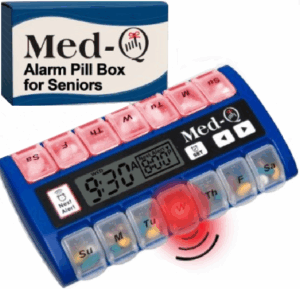
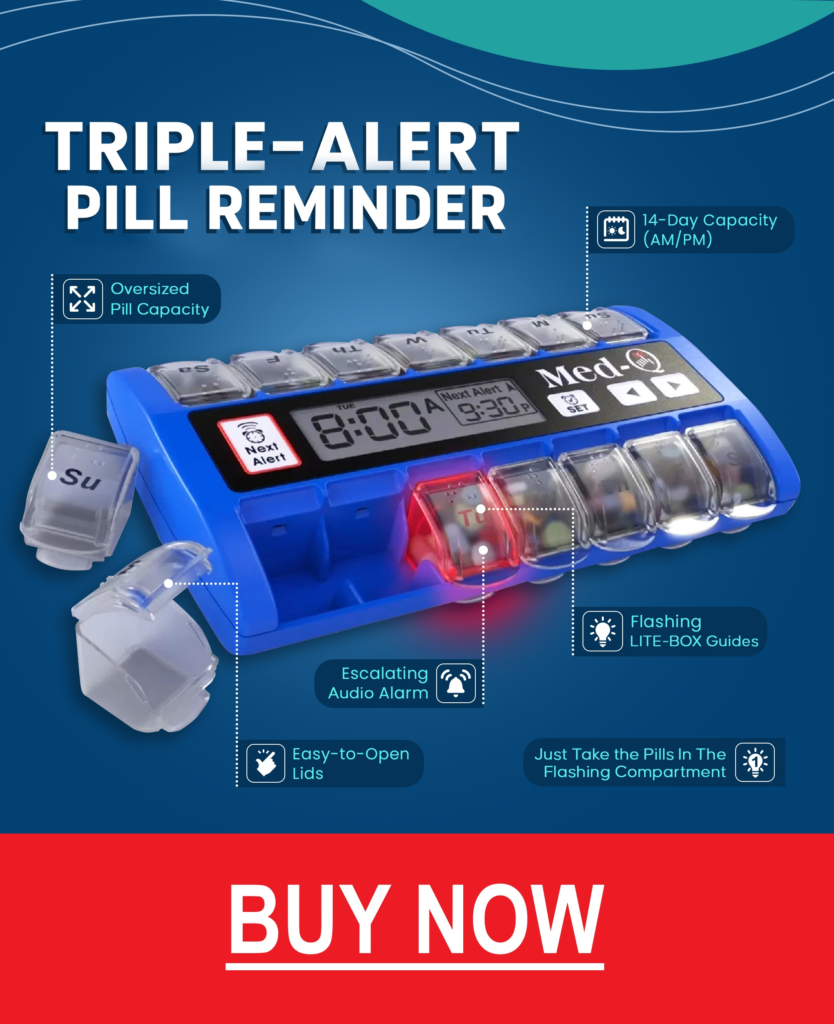
Med-Q automatic pill dispenser with alarms
As we age, we may begin suffering from Age Induced medication mistakes
To begin with, seniors suffer from AIMM’s (Age Induced Medication Mistakes). This cognitive decline is a normal part of the aging process. Hence, not to be confused with Alzheimer’s or Dementia.
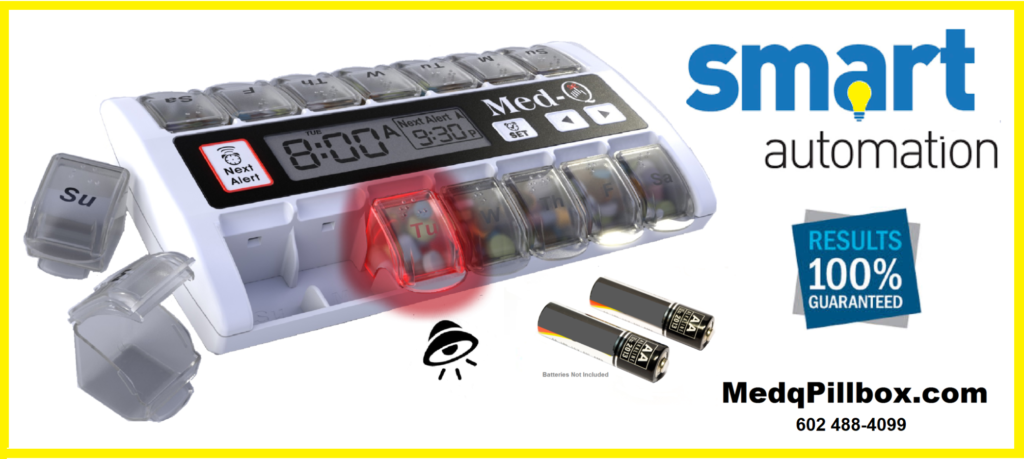
Caregivers are the first to use an automatic pill dispenser with alarms to help. A smart Pill Dispenser like the MED-Q Auto Pill Dispenser is the first part of developing a medication management strategy. In order to have a coherent medication management strategy, you or the caregiver should be focused on ensuring that all medications are being used appropriately, documenting the appropriate dosages, and in general creating a dynamic and comprehensive list that effectively tracks all the medications the senior in your life is consuming.
There are good sites that are helpful for this purpose.
First of all, doctors are aware of potential negative medication interactions. To illustrate, if a senior man or woman is one a complex assortment of different medications, accident can happen. For example, meds prescribed by different doctors means the risk of errors increases drastically. Another example, certain pills must be taken with food. Others must be taken with liquids. To sum up, another complication with medication management, This is often left unconsidered. Again, an automatic pill dispenser with alarms should be used.
Most pharmacies have tracking systems. that will alert a pharmacist about potential interactions.
For example, tracking will alert a pharmacist about potential negative prescription med interactions. Med-Q automatic pill dispenser alarms recommends, caregivers have a frank and open discussion with the pharmacist and is abig prdoctor. Ask about the the best way of maintaining medication compliance. is to have a frank and open discussion with your loved one. If your loved one is of sound mind, you can lay out a procedure for ensuring that everyone is on the same page. The goal, to remain medically compliant. The proper medication will reinforce the required behaviors to ensure that all of the life saving medications are taken as directed.
Automatic pill dispenser is a powerful tool for medical noncompliance
Likewise, medical noncompliance is a big problem for doctors and other healthcare professionals. In fact, it is one of the biggest obstacles for the physician. Furthermore, it might be one of the biggest impediments to the patient’s well-being. For example, when the patient does not take the pills. Another example, when the patient can not afford to buy medication. A third example, not following up for necessary medical testing.
Medical noncompliance (errors) are happening at an epidemic rate
There are countless reasons for medication mistakes
For example, using and old fashion pill box instead of an automatic pill dispenser with alarms and flashing guides. . Second example, Patients may need to pay for food instead of buying blood pressure prescription medication, or Again, people “blow off” follow-up teasing. The reason, can’t get time off of work or unable to get to the appointment. Finally, patients are unable to find transportation to the hospital.. Furthermore, if the doctor does not understand the person who is being diagnosised.
First, there is no difference with sex, age, culture, or education. Patient, confusion over medication is universal. Consequently, when a doctor gives a prescription for the patient to fill, the problems begin. The second ;problem, what kind of pill dispenser to load them in. .
Automatic pill dispenser alarms questions to ask:
First, ask when or how long the patient should take medication . If the physician does take adequate time to explain specifics of the medication, it is often soon forgotten by the patient. But can medication noncompliance be concerning enough to consider the consequences a catastrophic issue? Does it affect enough of our population to be considered an epidemic?
Try America’s Best Automatic pill dispenser with alarms and flashing guides. Take a proactive stance in medication management. Finally, a smart pill dispenser to replace the old fashion pill box that does not work.
 Health care profsionals are in agreement, “For most medications, it is safer to accidentally miss a single dose than to double dose” . Keep in mind that the pill/dosing guidelines vary drastically depending on the medication. For example, it is different for blood thinners or something like birth control.), it is always best to double-check with a professional. If in doubt, call the local pharmacy you got the prescription filled. Also, call e the