
Medication monitoring services

Medication monitoring services

Medication monitoring services

Best Alzheimer's Pill Dispenser
golden age of medicine
Why do seniors need Medication monitoring services?  You want
to be sure  is to see it with your own eyes loved ones have taken their pills.   However, that’s impractical three or more times a day on a daily basis. Even if living in the same home,.  Again, worse if you live across the country. Fortunately, a variety of Medication monitoring services has emerged recently to bring peace of mind and assure that pills are being taken on schedule.
Many of these systems use wireless communication. Others,  the internet and/or telemonitoring.  Designed to be certain if medication taken properly. In fact,  they are usually subscription-based services. A monthly charge will be billed. In addition, upfront cost of the pill dispenser unit.
With rising concerns over the long-term effects of certain medications, it’s more than ever for doctors to be aware of how their patients are taking medications and whether or not those medications are being taken as intended. Our medication monitoring process is comprehensive, detailed, and designed to produce reliable results as quickly as possible. It’s important information physicians can use to ensure their patients are receiving the most appropriate care and right medications.
Medication monitoring services are defined as “the practice of providing a secure storage area and controlled. access for medications that are brought into a program and used by the person served. The person. served must take the medication without any assistance (other than ancillary aid) from personnel

Medication monitoring services

Dealing with Chronic Illness

A chronic illness is defined as the presence of an organic, psychological or cognitive cause with a minimum duration of three months, leading to either functional limitation and participation in social life, dependence on one or more drugs, increased need for medical and home care.

First of all, people are living longer than ever before in human history. With people living longer the increase of  chronic diseases has been on the rise.  Hence, the use complex medication regimens, polypharmacy and thus increasing the iatrogenic risk. Medication non-adherence has become a major point of concern.

Consequences of Medication Non-adherence

First, there are negative and sometime deadly consequences of medication non-adherence. When talking about pharmacology, there is a new concept refereed to as ” therapeutic window ”. This is the effective concentration of any active medicine that will achieve the desired effect. These concentrations are affected by several factors.  For example, the catch interval. If there are problem, Med-Q Pill Reminder calls this non-compliance with treatment or medication non-adherence. Non-Compliance means that the pills will lose maximum effectiveness. Patients do not improve. 

More than half of U.S. adults regularly take prescription medications

First of all ,  a 2017 survey by Consumer Reports tells u s that over 50% of adults take some kind of pills.  Second of all, this does not include vitamins and other supplements.  That same report tell us that the number of prescriptions for all Americans, including children, increased 87% from 1998 to 2017.

Med-Q is an electronic Pill Dispenser with triple alarms

electronic pill dispenser
America’s #1 Smart electronic pill dispenser with Triple Alarms
Simply put, an electronic pill dispenser is simple.  Thus,  reliable as well as affordable .  To illustrate, the best way of managing prescription medications and supplements.  These electronic pill dispensers have been engineered to be user friendly.  Again, taking on the responsibility of remembering  medication.  However,  electronic pill dispensers are not all the same.

Our Aging Society

30,000 people reach the age of 65 every day. In addition 20% of people 65 and over have some kind of mental impairment.  Another example, 29% of seniors leaving the hospital will become non-compliant with their pills and medications.    Long-term care facilities do not have enough beds. The US government estimates that this number will double by 2038. The result,  resulting in estimated costs of $ 19 billion. Non-adherence to treatment is responsible for 32% of readmission to the hospital.  The cost in access of 200 Billion per year.

Worried if Grandma Missed a Pill.  

  A Smart Pill Box will repeat very 30 minutes.  This is no longer a Problem.  Med-Q Best Pill box with alarms repeats until the Medications have been taken and the next alert has been activated.  The Electronic Pill Dispenser means no more forgetting.  Not “Grandma’s Old Fashion Pill Box”.  In conclusion, Med-Q couldn’t make it any easier.

Disclaimer : All content posted on this website is commentary or opinion. This website does not give or attempt to give medical advice and your personal information is not stored. THIS WEBSITE IS NOT DESIGNED TO – AND DOES NOT – PROVIDE MEDICAL ADVICE.
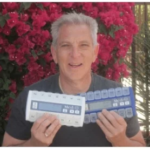
If you can’t remember whether you took your medication, what do you do?

What happens if you don’t remember if you took your medications?  When one is not sure if you took a pill, never, ever just take another dose yet. What could happen if you double dose?  If someone ingests an additional dose, the consequences can be deadly. In fact, an extra dose can raise the risk of harmful effects. Check your pill organizer, count the remaining pills in the bottle, or review the instructions that came with your prescription to find specific guidance. 

doctorHealth care profsionals are in agreement, “For most medications, it is safer to accidentally miss a single dose than to double dose” . Keep in mind that the pill/dosing guidelines vary drastically depending on the medication.  For example, it is different for  blood thinners or something like birth control.), it is always best to double-check with a professional.  If in doubt, call the local pharmacy you got the prescription filled.  Also, call e the America’s Poison Centers at 800-222-1222 .  This can help if you are concerned about over dosing. 

For further guidance, consult I can’t remember whether I took my medication, what do I do? on Medical News Today. To help prevent confusion in the future, you can implement some 9 Simple Strategies for Remembering To Take Your Medication or read the Why You Shouldn’t Skip Your Medication guide on WebMD.
 
If you are missing doses consistently, a few strategies can help get your routine back on track:
  • Use a weekly pillbox: These old fashion pill holders can be useful.   They show a quick visual cue to show which days  doses have been taken.
  • Use a Digital Pill Reminder: Medication reminders, like the Med-Q pill Box. have flashing guides.  These alarmed reminders help preventing over dosing. 
  • Try to do Habit stacking: Match up your daily pill-taking with a non-negotiable daily habit.  For example, your first cup of coffee or brushing yourhair.
  • Set electronic reminders: Use persistent reminder apps, alarm clocks, or simple smart phone alarm reminders.

What to do if Unsure?

The worry about over doing is real.  When unsure whether the dose has been taken, the best thing to do is speak with your health care provider or even your pharmacist. They will  advise you on the best course of action based on ythe specific medication. that is over dosed.

pill box for seniors

If you take oral tablets or capsules, you can count how many pills you have left. If you know when you started taking the pills out of that prescription bottle, this could help you determine whether you’ve taken your dose for that day.

Sometimes, when you haven’t taken your medication, there may still be time to take that dose. However, this could depend on the drug and dosing schedule.

Although in some cases, if it’s almost time to take your next dose, your doctor may recommend skipping the missed dose and taking your next dose at its regular time. Never take two doses at once to make up for a missed dose as doing so could raise your risk of side effects.

What happens if you accidentally take your medication twice?

Do not take more of a drug than your doctor prescribes. While serious side effects may be rare, for some medications, taking more than the recommended amount may lead to harmful effects or overdose. Some of the most dangerous medications to double-dose include:

  • heart maintenece medications
  • ADHD drugs, for example “Adderall”
  • medications for Type 1 Diabetes
  • prescription narcotic pain pills
  • psychiatric medications , for example “Wellbutrin.”

If you have any doubt, act quickly. 

Fist of all, contact your doctor right away.  Let them know you may have accidentally taken two doses or three doses of your daily medication. They will offer up advice.  The Healthcare profesional can often advise of what steps to take.  Also, they will let you know about symptoms to watch out for.

pill dispenser
America's #1 Pill Dispenser with Triple Alarms

Recent Tips

Scroll to Top