Do you have difficulty remembering to take your medication? If so, you’re not alone. In fact, one study found that about half of people taking medications don’t take them as prescribed. There are many factors that can contribute to this. But maintaining a consistent medication routine is something you can take steps to improve.
You may be taking several medications, have a complicated regimen, or just need a better way to stay on track. It may take some creativity to come up with a solution that works best for you. But being on top of your medications — no matter how you do it — is essential for your health and well-being. Here are eight creative options you can try.
1. Use pillboxes
Pillboxes are a very common way to organize and remember to take your medications. They can provide a simple and effective physical reminder of your daily medications and when to take them. For Example, the Med-Q pillbxo is the kind of pill organization tool can be a good option for people. Especially, those that have to deal with a more complicated medication regimen.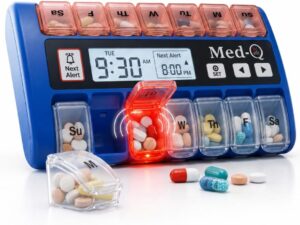
Pillboxes can range from simple and inexpensive to more complex with special features. The price goes up as the features increase. The right one is not a simple decision. First of all, you need to take into account their dosage schedules. Second, the amount of medications you take, and other factors. There are different types of pillboxes and pill remionders to choose from,. Some are programmable with built in alarms. Here are some example:
Weekly pillboxes: These have one compartment for each day of the week. They can be a good option if you take one or more pills at the same time once daily. Many pillboxes use different colors for days of the week. Some also have compartments that you can remove and carry with you, if needed.
Multiple-dose compartment pillboxes: This type of pillbox has multiple compartments for each day of the week. They can be a good fit if you’re taking one or more medications at different times of day, such as in the morning, at night, or with meals.
Automatic pill dispensers: This type of pillbox can automatically dispense the medication to you when it’s time to take it. You can also set alarms to remind you when doses are due. If you have hand dexterity or vision problems, automatic pill dispensers may be easier to use than other pillboxes. But you may need assistance from a trusted person to load the pill dispenser.
Keep in mind that some medications must be kept in their original containers and should not be stored in pillboxes. Talk to your pharmacist about the proper way to store your specific medications.
2. Use a medication reminder app
A medication reminder app is an adherence tool you can download on your smartphone. Each app is different. But their main function is to notify you when it is time to take your medications — whether you take them daily, weekly, or on a different schedule.
Many medication reminder apps have customizable features to accommodate your specific needs and medication schedules. These extra features can do more than just remind you to take your medications, including:
Syncing with other devices, such as smartwatches
Tracking health data and other medical information
Tracking refill reminders
Reminding you about missed doses
Informing you about potential interactions between the medications
Earning rewards or badges for consistent adherence
These apps can offer tools to help you better manage your health, while also keeping it simple, fun, and engaging. One example is the GoodRx Medicine Cabinet, which helps you organize your medications and set reminders for taking and refilling them, allowing you to earn rewards in the process.
3. Set up an alarm
While this approach may sound simple, setting alarms can be a very effective method to help you remember to take your medications. Make sure the alarm is loud and difficult to ignore so you don’t miss it.
There are several different types of alarms, including:
Physical alarms, such as an alarm clock
Alarms on your phone
Alarms on other devices, such the TV, computer, or iPad
Alarms on pillboxes (more on this later)
Physical alarms can be a good option if you usually take your medications at home and need to hear a loud alert when it’s time for your dose. But a single alarm may not be enough if you have a more complicated regimen.
You can also set alarms on your smartphone or smartwatch. This can be a better option if you take medications throughout the day, since you can set multiple alarms. It can also ensure that you’re reminded to take your medication whether you’re at home or on the go.
Setting alarms on other devices such as computers, iPads, TVs, or virtual home assistants is another option. This type of alarm may be a better fit if you use these devices more than your phone. If you spend a lot of time working at a computer, for example, you may find computer-based alarms more effective.
You can also set alarms using voiced-based virtual home assistants, such as Amazon Alexa or Google Home. This can be an effective option since the device speaks the reminder when it’s time to take your medication
4. Create a routine
Another option is creating a medication routine that’s tied to your regular daily activities. This option can give you flexibility to find a way that fits your lifestyle. It can also help you build a habit of taking your medications by associating it with an already established routine.
You can create a medication routine that’s tied to a variety of daily activities. What makes sense for you can depend on your schedule and the medications you take. But a few examples of activities to consider include:
Daily chores or tasks, such as walking the dog
Daily hygiene activities, such as brushing your teeth or taking a shower
Mealtimes, such as breakfast or dinner, if you can take your medication with food
Morning or bedtime routines, such as right when you wake up or before you fall asleep
Nightly entertainment, such as when you turn on the TV to watch an evening program
This type of medication routine can be a great option if you’re very consistent with your daily activities. But it may not work as well if you have a less consistent schedule.
5. Use a calendar
Some people may find that using a calendar is an effective way of staying on top of their medications. This can include physical calendars that you hang on the wall or digital calendars on your phone or computer. Some calendars are more simple and may just serve as a visual reminder to take your medication. Others are specifically designed for medication tracking.
Weekly and monthly calendars enable you to see all of your medications at a glance, which can help you plan ahead to avoid missing doses. They can also make it easier to keep track of dosage changes since you can document this information on your calendar.
Calendars can also be helpful in many different ways such as:
Tracking your progress throughout the month
Writing notes about your regimen
Color coding and customizing each day on the calendar
Keeping track of previous medications and regimen changes
Reminding you when your next refill is due
Documenting missed doses
6. Keep the pill bottles in visual sight
Sometimes, simply seeing your pill bottles can serve as an effective reminder to take your medications. Keeping the bottles in a common area of your home can act as a visual cue, prompting you to stay on track. You can take this a step further by flipping the bottles over after you’ve taken the day’s dose. This can create a simple and clear system for tracking your medication intake.
Here’s how this method works:
Spot your medication bottles.
Take the medication.
Flip the bottles over to show that the dose has been taken.
Before bed, flip the bottles back upright to reset the cycle for the next day.
This method is best if you have a simpler medication regimen. But if you need to take some medications more than once a day, flipping bottles could become confusing.
 Keep in mind that this method may not work for all medications, such as those that need to be stored in the refrigerator or secured in a lockbox. If you’re going to try this method for other medications, it’s important to store them properly. Common medication storage guidelines include:
Store in a cool, dry area.
Keep out of direct sunlight.
Ensure they’re out of reach of children and pets.
Talk to your pharmacist if you have questions about the correct way to store each of your medications. Proper storage ensures that they remain safe and effective for you to take.