The Cost of Not Taking Your Medicine Part 1

The Cost of Not Taking Your Medicine Part 1

The Cost of Not Taking Your Medicine
Med-q Pill Dispenser with alarms
What is Cost of Not Taking Your Medicine?  First of all, we are having a out-of-control problem in the United States.  Second of all, the costs affects more people than any  of the most common diseases.  The problem is worse with senior Americans.

It’s called medication no-adherence.  To sum up, prescription medication and supplement must be taken a s directed.  Forgetting or double dosing is 100 percent preventable.  Modern tools like an automatic pill dispenser with alarms and timer should be the base of medication management .

Modern tools like an automatic pill dispenser with alarms and timer should be the base of medication management .

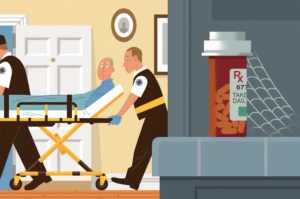
The numbers are struy shocking.  For example, 2015 studies show that 25%-35% of  prescriptions  never even get filled.  Furthermore, 50% of prescriptions for chronic disease, such as high blood pressure,  are not taken as directed.

This was reported  from a review in Annals of Internal Medicine.

  • “When people don’t take the medications prescribed for them, emergency department visits and hospitalizations increase and more people die,” said Bruce Bender, co-director of the Center for Health Promotion at National Jewish Health in Denver. Non-adherence is a gigantic issue.  Again,  no ‘1″ fix all  solution.  The reason,  so many different reasons why mistakes happen.
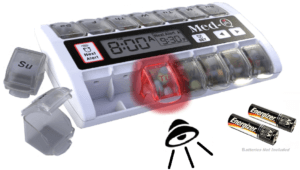
automatic pill dispenser with alarms and timer
automatic pill dispenser with alarms

The study gives insight into the problem

Most important, it explains why medications don’t work up to expectation in so many patients.  In fact, many simply don’t get better.  There may be a surprise relapses or even death.  Needless to say, when they are given prescriptions that keep them alive.

You may not believe this.  In fact, a full 35%  of kidney transplant patients are not taking the anti-rejection pills.  To illustrate, over 40% of heart attack patients don’t take high  blood pressure medications.  Finally, 50% of children with asthma either don’t use their inhalers consistently.

“When people don’t take the medications prescribed for them, emergency department visits and hospitalizations increase and more people die,” said Bruce Bender, co-director of the Center for Health Promotion at National Jewish Health in Denver. “Non adherence is a huge problem.  Furthermore, there’s no one solution because there are many different reasons why it happens.”

[cherry_sharing networks=”facebook,googleplus,pinterest,stumbleupon,reddit,twitter,linkedin,tumblr” style=”only-logos”]

Old Fashion Pill Reminders

Still Relying on an “Old Fashion” Pill Box or Ineffective Reminders?
If you can’t remember whether you took your medication, what do you do?

What happens if you don’t remember if you took your medications?  When one is not sure if you took a pill, never, ever just take another dose yet. What could happen if you double dose?  If someone ingests an additional dose, the consequences can be deadly. In fact, an extra dose can raise the risk of harmful effects. Check your pill organizer, count the remaining pills in the bottle, or review the instructions that came with your prescription to find specific guidance. 

doctorHealth care profsionals are in agreement, “For most medications, it is safer to accidentally miss a single dose than to double dose” . Keep in mind that the pill/dosing guidelines vary drastically depending on the medication.  For example, it is different for  blood thinners or something like birth control.), it is always best to double-check with a professional.  If in doubt, call the local pharmacy you got the prescription filled.  Also, call e the America’s Poison Centers at 800-222-1222 .  This can help if you are concerned about over dosing. 

For further guidance, consult I can’t remember whether I took my medication, what do I do? on Medical News Today. To help prevent confusion in the future, you can implement some 9 Simple Strategies for Remembering To Take Your Medication or read the Why You Shouldn’t Skip Your Medication guide on WebMD.
 
If you are missing doses consistently, a few strategies can help get your routine back on track:
  • Use a weekly pillbox: These old fashion pill holders can be useful.   They show a quick visual cue to show which days  doses have been taken.
  • Use a Digital Pill Reminder: Medication reminders, like the Med-Q pill Box. have flashing guides.  These alarmed reminders help preventing over dosing. 
  • Try to do Habit stacking: Match up your daily pill-taking with a non-negotiable daily habit.  For example, your first cup of coffee or brushing yourhair.
  • Set electronic reminders: Use persistent reminder apps, alarm clocks, or simple smart phone alarm reminders.

What to do if Unsure?

The worry about over doing is real.  When unsure whether the dose has been taken, the best thing to do is speak with your health care provider or even your pharmacist. They will  advise you on the best course of action based on ythe specific medication. that is over dosed.

pill box for seniors

If you take oral tablets or capsules, you can count how many pills you have left. If you know when you started taking the pills out of that prescription bottle, this could help you determine whether you’ve taken your dose for that day.

Sometimes, when you haven’t taken your medication, there may still be time to take that dose. However, this could depend on the drug and dosing schedule.

Although in some cases, if it’s almost time to take your next dose, your doctor may recommend skipping the missed dose and taking your next dose at its regular time. Never take two doses at once to make up for a missed dose as doing so could raise your risk of side effects.

What happens if you accidentally take your medication twice?

Do not take more of a drug than your doctor prescribes. While serious side effects may be rare, for some medications, taking more than the recommended amount may lead to harmful effects or overdose. Some of the most dangerous medications to double-dose include:

  • heart maintenece medications
  • ADHD drugs, for example “Adderall”
  • medications for Type 1 Diabetes
  • prescription narcotic pain pills
  • psychiatric medications , for example “Wellbutrin.”

If you have any doubt, act quickly. 

Fist of all, contact your doctor right away.  Let them know you may have accidentally taken two doses or three doses of your daily medication. They will offer up advice.  The Healthcare profesional can often advise of what steps to take.  Also, they will let you know about symptoms to watch out for.

pill dispenser
America's #1 Pill Dispenser with Triple Alarms

Recent Tips

Scroll to Top